Thursday, February 28, 2013

Seneca team raising money for Leukemia and Lymphoma Society ...

Screen shot 2013-02-28 at 4.01.36 PM

Seneca Strong is a team of?caring and committed faculty and friends from Seneca Middle School determined to make a difference?for others.

They will be participating in?The Leukemia & Lymphoma Society?s Pineapple Classic 5K?on?Sunday, April 21. You can support their cause by clicking on the link. Their efforts will help make a big difference in the fight against cancer.CLICK HERE if you would like to donate to Seneca Strong

What is The Leukemia & Lymphoma Society?s Pineapple Classic 5K?
The ?Pineapple? is a Hawaiian themed event that includes a 5k run with obstacles along the course followed by a luau.? Participants won?t know the obstacles until they literally run in to them on race day.? There are other event surprises along the way to keep them on their toes!? The reason behind all this mayhem is to help The Leukemia & Lymphoma Society advance lifesaving cancer research and patient services.

Who is The Leukemia & Lymphoma Society?
The Leukemia & Lymphoma Society (LLS) is the world?s largest voluntary health organization dedicated to funding blood cancer research, education and patient services.? The mission of LLS is to cure leukemia, lymphoma, Hodgkin?s disease and myeloma, and improve the quality of life of patients and their families.? Since its founding in 1949, LLS has invested more than $750 million for research specifically targeting blood cancers.

CLICK HERE if you would like to donate to Seneca Strong

?

Source: http://www.sachemreport.com/2013/02/28/seneca-team-raising-money-for-leukemia-and-lymphoma-society/

nyc marathon willie nelson khloe kardashian Wreck It Ralph Hunter Hayes Movember USC shooting

Rennard 'sex scandal' - Political Scrapbook

Nick Clegg on LBC radio

Nick Clegg?s version of events on the harassment allegations against Lord Rennard is unravelling at an alarming rate. The deputy prime minister had previously claimed that his office were informed of ?general concerns? regarding the party?s chief?executive?in 2008.

But with a former Lib Dem MP revealing she told the deputy prime minister about Rennard?s behaviour when he became party leader in 2007, Clegg was forced to defend himself?on a radio phone in this morning.

His poor attempt to account for this gap is already being likened to Richard Nixon:

?I can only tell you the truth as I can recollect it now?

And it got worse, with caller ?Cathy from Dulwich? turned out to be, errr, Cathy Newman from Channel 4 News, who seized on his admission that Rennard didn?t simply resign as chief executive for ?health and family reasons? as claimed at the time.?LBC producers didn?t seem to be impressed, however, and cut her off before she could follow up.

If it looks like a cover up and smells like a cover up ?

Source: http://politicalscrapbook.net/2013/02/rennard-sex-scandal-clegg-version-of-events-unravels-on-radio-phone-in/

ABC Family social security social security paulina gretzky paulina gretzky david bowie elvis presley

Wednesday, February 27, 2013

MetroPCS widens Rich Communications Services to all North American carriers

MetroPCS widens Rich Communications Services to all North American carriers

There's been a degree of irony to MetroPCS' support for Rich Communication Services when it's been limited to the one carrier's network in the US -- where's that universal chat and sharing we were promised? The carrier plans to live up to those lofty expectations with word that its Jibe Mobile-developed Joyn service will talk to devices on any North American carrier that supports the spec. That currently doesn't equate to ubiquitous access when RCS isn't widespread, but it's a start. We'll just have to wait for the expanded service to deploy later this year, and for more hardware to hit the streets.

Filed under: , ,

Comments

Source: MetroPCS

Source: http://feeds.engadget.com/~r/weblogsinc/engadget/~3/wL5ozRduAP0/

neurofibromatosis steve jobs fbi file suge knight obama birth control mortgage settlement macauly culkin joe namath

Progress at Iran nuke talks?

ALMATY (Reuters) - Major powers on Tuesday offered Iran limited sanctions relief in return for a halt to the most controversial part of its nuclear program, and Iran promised to respond with a proposal on the same scale.

The talks in Kazakhstan were the first in eight months between Iran and the five permanent members of the U.N. Security Council plus Germany - the "P5+1" - on a decade-old dispute that threatens to trigger another war in the Middle East.

Iran has used the time since the last meeting in June to further expand activity that the West suspects is aimed at enabling it to build a nuclear bomb, something that Israel has suggested it will prevent by force if diplomacy fails.

The two-day negotiations in the city of Almaty follow inconclusive meetings last year in Istanbul, Baghdad and Moscow.

U.S. Secretary of State John Kerry said in Berlin that he hoped Iran "will make its choice to move down the path of a diplomatic solution".

A Western official who declined to be named said the talks had been "useful" and confirmed they would continue on Wednesday as scheduled.

But with the Islamic Republic's political elite preoccupied with worsening infighting before a presidential election in June, few believe the meeting will yield a quick breakthrough.

"It is clear that nobody expects to come from Almaty with a fully done deal," said a spokesman for the European Union's foreign policy chief Catherine Ashton, who oversees contacts with Iran on behalf of world powers.

OFFER PRESENTED

A U.S. official said on Monday that the powers' offer to Iran - an updated version of one rejected by Iran last year - would take into account its recent nuclear advances, but also take "some steps in the sanctions arena".

This would address some of Iran's concerns but not meet its demand that all sanctions be lifted, the official said.

A Western official later said the powers had formally presented the offer during Tuesday's talks but gave no details.

In Almaty, a source close to the Iranian negotiators told reporters: "Depending on what proposal we receive from the other side we will present our own proposal of the same weight. The continuation of talks depends on how this exchange of proposals goes forward."

Iranian media also said the talks would continue, without saying whether the Iranian proposal had been presented.

At best, diplomats and analysts say, Iran will take the joint offer from the United States, Russia, France, Germany, Britain and China seriously and agree to hold further talks soon on practical steps to ease the tension.

"We are looking for flexibility from the Iranians," said Ashton's spokesman, Michael Mann.

But Iran, whose chief negotiator Saeed Jalili is close to Supreme Leader Ayatollah Ali Khamenei and is a veteran of Iran's 1980s war against Iraq and the Western powers that backed it, has shown no sign of willingness to scale back its nuclear work.

It argues that has a sovereign right to carry out nuclear enrichment for peaceful energy purposes, and in particular refuses to close its underground Fordow enrichment plant, a condition the powers have set for any sanctions relief.

FASTER ENRICHMENT

A U.N. nuclear watchdog report last week said Iran was for the first time installing advanced centrifuges that would allow it to significantly speed up its enrichment of uranium, which can have both civilian and military purposes.

Tightening Western sanctions on Iran over the last 14 months are hurting Iran's economy and slashing oil revenue. Its currency has more than halved in value, which in turn has pushed up inflation.

The central bank governor was quoted on Monday as saying Iran's inflation was likely to top 30 percent in coming weeks as the sanctions contribute to shortages and stockpiling.

But analysts say the sanctions are not close to having the crippling effect envisaged by Washington and - so far at least - they have not prompted a change in Iran's nuclear course.

Western officials said the powers' offer would include an easing of restrictions on trade in gold and other precious metals if Tehran closes Fordow.

The facility is used for enriching uranium to 20 percent fissile purity, a short technical step from weapons-grade.

The web-based news site Al Monitor said on Tuesday that the big powers' offer could also include some relief for the petrochemical industry and in banking. Officials present in Almaty declined to comment on the report.

The stakes are high with Israel, assumed to be the only nuclear-armed power in the Middle East, hinting strongly at military action and Iran pledging to hit back hard if attacked.

Western officials acknowledge an easing of U.S. and European sanctions on trade in gold represents a relatively modest step. But gold could be used as part of barter transactions that might allow Iran to circumvent financial sanctions.

Iran's Foreign Ministry spokesman last week dismissed the reported incentive as insufficient and a senior Iranian lawmaker has ruled out closing Fordow, close to the holy city of Qom.

(Additional reporting by Fredrik Dahl in Almaty, Zahra Hosseinian in Zurich, Arshad Mohammed and Stephen Brown in Berlin)

Source: http://news.yahoo.com/powers-offer-iran-sanctions-relief-nuclear-talks-055616179.html

Candy Crowley binders of women Alexis Wright presidential debates Felix Baumgartner Little Nemo gawker

Today?s misc. links (Unqualified Offerings)

Share With Friends: Share on FacebookTweet ThisPost to Google-BuzzSend on GmailPost to Linked-InSubscribe to This Feed | Rss To Twitter | Politics - Top Stories Stories, RSS Feeds and Widgets via Feedzilla.

Source: http://news.feedzilla.com/en_us/stories/politics/top-stories/287854931?client_source=feed&format=rss

arnold schwarzenegger revenge revenge adam shulman adam shulman peanut butter recall jason aldean

Tuesday, February 26, 2013

Virus shows promise as prostate cancer treatment

Tuesday, February 26, 2013

A recombinant Newcastle disease virus kills all kinds of prostate cancer cells, including hormone resistant cells, but leaves normal cells unscathed, according to a paper published online ahead of print in the Journal of Virology. A treatment for prostate cancer based on this virus would avoid the adverse side effects typically associated with hormonal treatment for prostate cancer, as well as those associated with cancer chemotherapies generally, says corresponding author Subbiah Elankumaran of Virginia Polytechnic Institute, Blacksburg. The modified virus is now ready to be tested in preclinical animal models, and possibly in phase I human clinical trials.

Newcastle disease virus kills chickens, but does not harm humans. It is an oncolytic virus that hones in on tumors, and has shown promising results in a number of human clinical trials for various forms of cancer. However, successful treatments have required multiple injections of large quantities of virus, because in such trials the virus probably failed to reach solid tumors in sufficient quantities, and spread poorly within the tumors.

The researchers addressed this problem by modifying the virus's fusion protein. Fusion protein fuses the virus envelope to the cell membrane, enabling the virus to enter the host cell. These proteins are activated by being cleaved by any of a number of different cellular proteases. They modified the fusion protein in their construct such that it can be cleaved only by prostate specific antigen (which is a protease). That minimizes off-target losses, because these "retargeted" viruses interact only with prostate cancer cells, thus reducing the amount of virus needed for treatment.

Retargeted Newcastle disease virus has major potential advantages over other cancer therapies, says Elankumaran. First, its specificity for prostate cancer cells means it would not attack normal cells, thereby avoiding the various unpleasant side effects of conventional chemotherapies. In previous clinical trials, even with extremely large doses of naturally occurring strains, "only mild flu-like symptoms were seen in cancer patients," says Elankumaran. Second, it would provide a new treatment for hormone-refractory patients, without the side effects of testosterone suppression that result from hormonal treatments.

About one man in six will be diagnosed with prostate cancer, and one in 36 will die of this disease. Men whose prostate cancer becomes refractory to hormone treatment have a median survival of about 40 months if they have bone metastases, and 68 months if they do not have bone metastases.

###

Paper: http://www.asm.org/images/Communications/tips/2013/0213prostate.pdf

American Society for Microbiology: http://www.asm.org

Thanks to American Society for Microbiology for this article.

This press release was posted to serve as a topic for discussion. Please comment below. We try our best to only post press releases that are associated with peer reviewed scientific literature. Critical discussions of the research are appreciated. If you need help finding a link to the original article, please contact us on twitter or via e-mail.

This press release has been viewed 57 time(s).

Source: http://www.labspaces.net/127018/Virus_shows_promise_as_prostate_cancer_treatment

nick collins dave matthews ambien wwdc madden 13 cover dalai lama tamera mowry

Mediterranean-style diets found to cut heart risks

FILE - In this Thursday Jan. 17, 2013 file photo, a fishmonger prepares fish for a client in a market in Barcelona, Spain. Mediterranean diets have long been touted as heart-healthy, but that's based on observational studies. Now, one of the longest and most scientific tests suggests this style of eating can cut the chance of suffering heart-related problems, especially strokes, in older people at high risk of them. Results were published online Monday, Feb. 25, 2013 by the New England Journal of Medicine. (AP Photo/Emilio Morenatti)

FILE - In this Thursday Jan. 17, 2013 file photo, a fishmonger prepares fish for a client in a market in Barcelona, Spain. Mediterranean diets have long been touted as heart-healthy, but that's based on observational studies. Now, one of the longest and most scientific tests suggests this style of eating can cut the chance of suffering heart-related problems, especially strokes, in older people at high risk of them. Results were published online Monday, Feb. 25, 2013 by the New England Journal of Medicine. (AP Photo/Emilio Morenatti)

FILE - In this Thursday Jan. 17, 2013 file photo, a woman buys fruit at a market in Barcelona, Spain. Mediterranean diets have long been touted as heart-healthy, but that's based on observational studies. Now, one of the longest and most scientific tests suggests this style of eating can cut the chance of suffering heart-related problems, especially strokes, in older people at high risk of them. The study lasted five years and involved about 7,500 people in Spain. Results were published online Monday, Feb. 25, 2013 by the New England Journal of Medicine. (AP Photo/Emilio Morenatti)

Pour on the olive oil, preferably over fish and vegetables: One of the longest and most scientific tests of a Mediterranean diet suggests this style of eating can cut the chance of suffering heart-related problems, especially strokes, in older people at high risk of them.

The study lasted five years and involved about 7,500 people in Spain. Those who ate Mediterranean-style with lots of olive oil or nuts had a 30 percent lower risk of major cardiovascular problems compared to those who were told to follow a low-fat diet but who in reality, didn't cut fat very much. Mediterranean meant lots of fruit, fish, chicken, beans, tomato sauce, salads, and wine and little baked goods and pastries.

Mediterranean diets have long been touted as heart-healthy, but that's based on observational studies that can't prove the point. The new research is much stronger because people were assigned diets to follow for a long time and carefully monitored. Doctors even did lab tests to verify that the Mediterranean diet folks were consuming more olive oil or nuts as recommended.

Most of these people were taking medicines for high cholesterol and blood pressure, and researchers did not alter those proven treatments, said one study leader, Dr. Ramon Estruch of Hospital Clinic in Barcelona.

But as a first step to prevent heart problems, "we think diet is better than a drug" because it has few if any side effects, Estruch said. "Diet works."

Results were published online Monday by the New England Journal of Medicine and were discussed at a nutrition conference in Loma Linda, Calif.

People in the study were not given rigid menus or calorie goals because weight loss was not the aim. That could be why they found the "diets" easy to stick with ? only about 7 percent dropped out within two years. There were twice as many dropouts in the low-fat group than among those eating Mediterranean-style.

Researchers also provided the nuts and olive oil, so it didn't cost participants anything to use these relatively pricey ingredients. The type of oil may have mattered ? they used extra-virgin olive oil, which is minimally processed and richer than regular or light olive oil in the chemicals and nutrients that earlier studies have suggested are beneficial.

The study involved people ages 55 to 80, just over half of them women. All were free of heart disease at the start but were at high risk for it because of health problems ? half had diabetes and most were overweight and had high cholesterol and blood pressure.

They were assigned to one of three groups: Two followed a Mediterranean diet supplemented with either extra-virgin olive oil (4 tablespoons a day) or with walnuts, hazelnuts and almonds (a fistful a day). The third group was urged to eat a low-fat diet heavy on bread, potatoes, pasta, rice, fruits, vegetables and fish and light on baked goods, nuts, oils and red meat.

Independent monitors stopped the study after nearly five years when they saw fewer problems in the two groups on Mediterranean diets.

Doctors tracked a composite of heart attacks, strokes or heart-related deaths. There were 96 of these in the Mediterranean-olive oil group, 83 in the Mediterranean-nut group and 109 in the low-fat group.

Looked at individually, stroke was the only problem where type of diet made a big difference. Diet had no effect on death rates overall.

The Mediterranean diet proved better even though its followers ate about 200 calories more per day than the low-fat group did. The study leaders now are analyzing how each of the diets affected weight gain or loss and body mass index.

The Spanish government's health research agency initiated and paid for the study, and foods were supplied by olive oil and nut producers in Spain and the California Walnut Commission. Many of the authors have extensive financial ties to food, wine and other industry groups but said the sponsors had no role in designing the study or analyzing and reporting its results.

Rachel Johnson, a University of Vermont professor who heads the American Heart Association's nutrition committee, said the study is very strong because of the lab tests to verify oil and nut consumption and because researchers tracked actual heart attacks, strokes and deaths ? not just changes in risk factors such as high cholesterol.

"At the end of the day, what we care about is whether or not disease develops," she said. "It's an important study."

Rena Wing, a weight-loss expert at Brown University, noted that researchers provided the oil and nuts, and said "it's not clear if people could get the same results from self-designed Mediterranean diets" ? or if Americans would stick to them more than Europeans who are used to such foods.

Dr. George Bray of the Pennington Biomedical Research Center in Baton Rouge, La., said he would give the study "a positive ? even glowing ? comment" and called it "the best and certainly one of the largest prospective dietary trials ever done."

"The data are sufficiently strong to convince me to move my dietary pattern closer to the Mediterranean Diet that they outline," he added.

Another independent expert also praised the study as evidence diet can lower heart risks.

"The risk reduction is close to that achieved with statins," cholesterol-lowering drugs, said Dr. Robert Eckel, a diet and heart disease expert at the University of Colorado.

"But this study was not carried out or intended to compare diet to statins or blood pressure medicines," he warned. "I don't think people should think now they can quit taking their medicines."

___

Online:

Journal: http://www.nejm.org

___

Marilynn Marchione can be followed at http://twitter.com/MMarchioneAP

Associated Press

Source: http://hosted2.ap.org/APDEFAULT/bbd825583c8542898e6fa7d440b9febc/Article_2013-02-25-Mediterranean%20Diet/id-46704d26c95e4feda887fd6c6fa347cd

jon corzine austin rivers austin rivers sweet home alabama etch a sketch the host hoodie

Study finds maize in diets of people in coastal Peru dates to 5,000 years ago

Study finds maize in diets of people in coastal Peru dates to 5,000 years ago [ Back to EurekAlert! ] Public release date: 25-Feb-2013
[ | E-mail | Share Share ]

Contact: Nancy O'Shea
media@fieldmuseum.org
312-665-7103
Field Museum

For decades, archaeologists have struggled with understanding the emergence of a distinct South American civilization during the Late Archaic period (3000-1800 B.C.) in Peru. One of the persistent questions has been the role of agriculture and particularly corn (maize) in the evolution of complex, centralized societies. Up until now, the prevailing theory was that marine resources, not agriculture and corn, provided the economic engine behind the development of civilization in the Andean region of Peru.

Now, breakthrough research led by Field Museum curator Dr. Jonathan Haas is providing new resolution to the issue by looking at microscopic evidence found in soil, on stone tools, and in coprolites from ancient sites and dated with over 200 Carbon-14 dates.

After years of study, Haas and his colleagues have concluded that during the Late Archaic, maize (Zea mays, or corn) was indeed a primary component in the diet of people living in the Norte Chico region of Peru, an area of remarkable cultural florescence in 3rd millennium B.C. Their research is the subject of a paper that appears in the online Early Edition issue of Proceedings of the National Academy of Sciences (PNAS) the week of February 25, 2013..

"This new body of evidence demonstrates quite clearly that the very earliest emergence of civilization in South America was indeed based on agriculture as in the other great civilizations of Mesopotamia, Egypt, India, and China," said Haas.

Haas and his team focused on sites in the desert valleys of Pativilca and Fortaleza north of Lima where broad botanical evidence pointed to the extensive production, processing and consumption of maize between 3000 and 1800 B.C. They studied a total of 13 sites. The two most extensively studied sites were Caballete, about six miles inland from the Pacific Ocean and consisting of six large platform mounds arranged in a "U" shape, and the site of Huaricanga, about 14 miles inland and consisting one very large mound and several much smaller mounds on either side.

The scientists targeted several areas at the sites including residences, trash pits, ceremonial rooms, and campsites. A total of 212 radiocarbon dates were obtained in the course of all the excavations.

Macroscopic remains of maize (kernels, leaves, stalks, and cobs) were rare.

However, the team looked deeper and found an abundance of microscopic evidence of maize in various forms in the excavations. One of the clearest markers was the abundance of maize pollen in the prehistoric soil samples. While maize is grown in the area today, they were able to rule out modern day contamination because modern maize pollen grains are larger and turn dark red when stain is applied. Also, modern soil samples consistently contain pollen from the Australian Pine (Casuarinaceae Casuarina), a plant which is an invasive species from Australia never found in prehistoric samples.

A majority of the soil samples analyzed came from trash pits associated with residential architecture. Other samples were taken from places such as room floors and construction debris. Of the 126 soil samples (not counting stone tools and coprolites) analyzed, 61 contained Z. mays pollen. (In fact, Z. mays was the second most common pollen found in the total of all samples, behind only pollen from cattails which have wind-pollinated flowers.) This is consistent with the percentage of maize pollen found in pollen analyses from sites in other parts of the world where maize is a major crop and constitutes the primary source of calories in the diet.

Haas and his colleagues also analyzed residues on stone tools used for cutting, scraping, pounding, and grinding. The tools were examined for evidence of plant residues, particularly starch grains and phytoliths (plant silica bodies). Of the 14 stone tools analyzed, 11 had maize starch grains on the working surfaces and two had maize phytoliths.

Coprolites (preserved fecal material) provide the best direct evidence of prehistoric diet. Among 62 coprolites analyzed of all types 34 human, 16 domesticated dog, and others from various animals 43 (or 69 percent) contained maize starch grains, phytoliths, or other remains. Of the 34 human coprolites, 23 (or 68 percent) contained evidence of maize. (The second most common grain in humans came from sweet potatoes.) Coprolites also showed that fish, mostly anchovies, did provide the primary protein in the diet, but not the calories.

The researchers concluded that the prevalence of maize in multiple contexts and in multiple sites indicates this domesticated food crop was grown widely in the area and constituted a major portion of the local diet, and it was not used just on ceremonial occasions. The research ultimately confirms the importance of agriculture in providing a strong economic base for the rise of complex, centralized societies in the emergence of the world's civilizations.

###

All of the botanical work conducted on this project was carried out at the new Laboratorio de Palinologa y Paleobotnica at the Universidad Peruana Cayetano Heredia, under the direction of Luis Huamn. Analysis of the botanical remains was a collaboration among Huaman, David Goldstein, National Park Service, Karl Reinhard, University of Nebraska, Cindy Vergel, Universidad Peruana Cayetano Heredia. The Project was co-directed by Haas and Winifred Creamer, Northern Illinois University, with funding from the National Science Foundation.

Photos available upon request. Please contact Field Museum public relations through e-mail or at 312-665-7100.


[ Back to EurekAlert! ] [ | E-mail | Share Share ]

?


AAAS and EurekAlert! are not responsible for the accuracy of news releases posted to EurekAlert! by contributing institutions or for the use of any information through the EurekAlert! system.


Study finds maize in diets of people in coastal Peru dates to 5,000 years ago [ Back to EurekAlert! ] Public release date: 25-Feb-2013
[ | E-mail | Share Share ]

Contact: Nancy O'Shea
media@fieldmuseum.org
312-665-7103
Field Museum

For decades, archaeologists have struggled with understanding the emergence of a distinct South American civilization during the Late Archaic period (3000-1800 B.C.) in Peru. One of the persistent questions has been the role of agriculture and particularly corn (maize) in the evolution of complex, centralized societies. Up until now, the prevailing theory was that marine resources, not agriculture and corn, provided the economic engine behind the development of civilization in the Andean region of Peru.

Now, breakthrough research led by Field Museum curator Dr. Jonathan Haas is providing new resolution to the issue by looking at microscopic evidence found in soil, on stone tools, and in coprolites from ancient sites and dated with over 200 Carbon-14 dates.

After years of study, Haas and his colleagues have concluded that during the Late Archaic, maize (Zea mays, or corn) was indeed a primary component in the diet of people living in the Norte Chico region of Peru, an area of remarkable cultural florescence in 3rd millennium B.C. Their research is the subject of a paper that appears in the online Early Edition issue of Proceedings of the National Academy of Sciences (PNAS) the week of February 25, 2013..

"This new body of evidence demonstrates quite clearly that the very earliest emergence of civilization in South America was indeed based on agriculture as in the other great civilizations of Mesopotamia, Egypt, India, and China," said Haas.

Haas and his team focused on sites in the desert valleys of Pativilca and Fortaleza north of Lima where broad botanical evidence pointed to the extensive production, processing and consumption of maize between 3000 and 1800 B.C. They studied a total of 13 sites. The two most extensively studied sites were Caballete, about six miles inland from the Pacific Ocean and consisting of six large platform mounds arranged in a "U" shape, and the site of Huaricanga, about 14 miles inland and consisting one very large mound and several much smaller mounds on either side.

The scientists targeted several areas at the sites including residences, trash pits, ceremonial rooms, and campsites. A total of 212 radiocarbon dates were obtained in the course of all the excavations.

Macroscopic remains of maize (kernels, leaves, stalks, and cobs) were rare.

However, the team looked deeper and found an abundance of microscopic evidence of maize in various forms in the excavations. One of the clearest markers was the abundance of maize pollen in the prehistoric soil samples. While maize is grown in the area today, they were able to rule out modern day contamination because modern maize pollen grains are larger and turn dark red when stain is applied. Also, modern soil samples consistently contain pollen from the Australian Pine (Casuarinaceae Casuarina), a plant which is an invasive species from Australia never found in prehistoric samples.

A majority of the soil samples analyzed came from trash pits associated with residential architecture. Other samples were taken from places such as room floors and construction debris. Of the 126 soil samples (not counting stone tools and coprolites) analyzed, 61 contained Z. mays pollen. (In fact, Z. mays was the second most common pollen found in the total of all samples, behind only pollen from cattails which have wind-pollinated flowers.) This is consistent with the percentage of maize pollen found in pollen analyses from sites in other parts of the world where maize is a major crop and constitutes the primary source of calories in the diet.

Haas and his colleagues also analyzed residues on stone tools used for cutting, scraping, pounding, and grinding. The tools were examined for evidence of plant residues, particularly starch grains and phytoliths (plant silica bodies). Of the 14 stone tools analyzed, 11 had maize starch grains on the working surfaces and two had maize phytoliths.

Coprolites (preserved fecal material) provide the best direct evidence of prehistoric diet. Among 62 coprolites analyzed of all types 34 human, 16 domesticated dog, and others from various animals 43 (or 69 percent) contained maize starch grains, phytoliths, or other remains. Of the 34 human coprolites, 23 (or 68 percent) contained evidence of maize. (The second most common grain in humans came from sweet potatoes.) Coprolites also showed that fish, mostly anchovies, did provide the primary protein in the diet, but not the calories.

The researchers concluded that the prevalence of maize in multiple contexts and in multiple sites indicates this domesticated food crop was grown widely in the area and constituted a major portion of the local diet, and it was not used just on ceremonial occasions. The research ultimately confirms the importance of agriculture in providing a strong economic base for the rise of complex, centralized societies in the emergence of the world's civilizations.

###

All of the botanical work conducted on this project was carried out at the new Laboratorio de Palinologa y Paleobotnica at the Universidad Peruana Cayetano Heredia, under the direction of Luis Huamn. Analysis of the botanical remains was a collaboration among Huaman, David Goldstein, National Park Service, Karl Reinhard, University of Nebraska, Cindy Vergel, Universidad Peruana Cayetano Heredia. The Project was co-directed by Haas and Winifred Creamer, Northern Illinois University, with funding from the National Science Foundation.

Photos available upon request. Please contact Field Museum public relations through e-mail or at 312-665-7100.


[ Back to EurekAlert! ] [ | E-mail | Share Share ]

?


AAAS and EurekAlert! are not responsible for the accuracy of news releases posted to EurekAlert! by contributing institutions or for the use of any information through the EurekAlert! system.


Source: http://www.eurekalert.org/pub_releases/2013-02/fm-sfm022113.php

Al Smith Dinner Herman Melville Books Kyna Treacy megan fox Bb&t Lane Goodwin Romnesia

2 adults, 2 kids missing after abandoning sailboat

By Lisa Fernandez, NBCBayArea.com

The search resumed on Monday for two adults and two children who called for help on their sinking sailboat about 65 miles off Monterey on Sunday.

A Coast Guard helicopter took off about 6:45 a.m. to look again for the four, including two children under 8, who reported their sailboat was sinking about 4:20 p.m. Sunday, according to Coast Guard Lt. Heather Lampert. She added that the boaters said their 29-foot sailboat was taking on water and their electronics were failing, and their boat may be called the Charmblow.

The four were originally thought to have gone missing off Half Moon Bay and are believed to be traveling south based on the flow of the current, Coast Guard officials said.

An hour later, the group reported that they were abandoning their boat. They didn't have life rafts so they were trying to make one out of a cooler and life preserver ring, Lampert said. It's unknown if they had life jackets.

The Coast Guard then lost radio contact with the group.

The National Weather Service had issued an advisory throughout the weekend warning boaters of strong winds and rough seas around the Bay Area.

Mariners "operating smaller vessels should avoid navigating in these conditions," the advisory said.

A search overnight, which included crews from the California Air National Guard, and Coast Guardsmen aboard a 210-foot cutter, yielded no results.

The Coast Guard is asking anyone with any information regarding the incident to notify the Coast Guard immediately at 415-399-3547.

? NBC Bay Area's Bob Redell contributed to this report.

?

?

This story was originally published on

Source: http://usnews.nbcnews.com/_news/2013/02/25/17083803-two-adults-two-children-missing-after-abandoning-sailboat-off-california-coast?lite

sandusky Sam Champion Hulk Hogan sex tape orioles venezuela Sarah Jones chicago marathon

Monday, February 25, 2013

Monday in politics: Obama meets with governors on sequester, and more

It began as a seemingly awkward Jack Nicholson introduction of the very long list on nominees, but the Best Picture denouement?at a very long Oscars ceremony on Sunday turned into a surprise appearance by Michelle Obama, via satellite from the Governors' Ball in Washington, D.C.?where earlier she had sat next to Chris Christie?to introduce and announce the winner,?Argo.?

Source: http://news.yahoo.com/blogs/ticket/monday-politics-obama-meets-governors-sequester-more-113426031--politics.html

ncaa football CES russell wilson Pokemon nhl jillian michaels Freddy E

Saturday, February 23, 2013

The Warlocks Of Centrism Versus That Muggle-Loving Obama (OliverWillisLikeKryptoniteToStupid)

Share With Friends: Share on FacebookTweet ThisPost to Google-BuzzSend on GmailPost to Linked-InSubscribe to This Feed | Rss To Twitter | Politics - Top Stories Stories, News Feeds and News via Feedzilla.

Source: http://news.feedzilla.com/en_us/stories/politics/top-stories/286882781?client_source=feed&format=rss

atomic clock

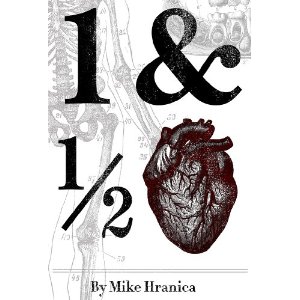
Mike Ragogna: Bang Bang Boom Boom: Chatting with Beth Hart, The Devil Wears Prada's Mike Hranica's One & A Half Hearts, and NC Rocks OH

2013-02-21-51wiVCyntL._SL500_AA300_.jpg

THE DEVIL WEARS ONE & A HALF HEARTS

Whaaaaat? The Devil Wears Prada's Mike Hranica wrote a book? And it's called One & A Half Hearts, looking back on the creation of the band's last album Dead Throne, which debuted at #10 on Billboard's Top 200? No frakin' way! (Yes, shameless Battlestar Galactica ref, and why the hell didn't Syfy commission a Blood & Chrome series from that killer pilot, but I digress...)

So here's how the website info kind of reads: "One & A Half Hearts is a subjective look at the lyrical creation of The Devil Wears Prada's fourth full length (album) Dead Throne. The band's lead vocalist analyzes the fundamentals and the importance behind the album's language. and its intentions, while constantly maintaining focus on themes of romance, idolatry, and hope." Cutting to the idolatry part right now...


2013-02-21-51kU2Dpc6TL._SL500_AA300_.jpg

A Conversation with Beth Hart

Mike Ragogna: So how are you doing, Beth Hart?

Beth Hart: Hey, how are you?

MR: Just dandy. So Bang Bang Boom Boom. Tell me everything about it. Leave nothing out.

BH: [laughs] It's such a work of love, oh my God, and there are so many love songs on it. I think it's my first record that I've actually written a lot about love. Let's see...musically, it was definitely really challenging for me. I didn't have any intention on making a record, I just had the intention about two years ago of setting off into a quest of a new kind of music for myself. It was inspired by doing a record with Joe Bonamassa. On that record, we did a lot of cover songs, and we did a bunch of jazz and blues and rock, a lot of stuff that centered around a soulful kind of thing. It inspired me so much that I thought, "Wow, I'm really going to put my head to the piano and work on some of these changes and some of these vibes, so I kind of went back and listened to a lot of stuff I was growing up listening to. I listened to a lot of genres of music--a lot of gospel, a lot of jazz, a lot of blues, a lot of hard, hard, hard rock, old school rock, a lot of modern rock, and a lot of classical music and reggae.

Those are like my forms, and so this time, I didn't really have a form of knowing what I was doing, so I pulled out all those old records again. I was listening to a lot of Joe Turner and Billie Holiday and really wanting to be fractured by like Thelonious Monk and stuff like that, all the crazy changes and fun stuff and the great lyrics. Something that I found was I was enjoying writing so much in this new genre, probably because it was fresh and something different for me. But one of the things I realized later into the writing of the record--this was before I started doing any of the co-writes, this is just stuff on my own--I noticed that my lyrics were changing from the past. The subject matters I'd choose a lot before were life and my disappointments with it and shame with myself, a lot of talking about how I felt either with myself or life in general, but not a lot about love. I noticed that that was coming up a lot in this record and it made me really happy to see how when you shift yourself musically and you start to challenge yourself musically, your stories and your philosophies on life that you didn't even know you had can show up in a lyric. I had a lot of fun with that. I'm really proud of it and I had a great time.

I wrote with some great writers, too. I wrote with James House, who's a singer, songwriter, musician. I have to give him major cred on "Caught Out In The Rain."; that was really his idea and I just love that song. I wrote with Rune Westberg on two songs, "Bang Bang Boom Boom," and "Thru The Window Of My Mind." Rune Westberg is an old friend of mine, a great songwriter, and he and I have written in the past. It was funny, I hadn't done any writing with him on this whole record, and then, right before I went in to work with Kevin Shirley who did the record for me, I just stopped by his house and we wrote two songs together really quickly and that was "Bang Bang Boom Boom" and "Thru The Window Of My Mind." I was so happy to work with him again and have such great music. I really love those two songs. I worked with Juan Winans who's an amazing songwriter and part of that whole BeBe and CeCe Winans gospel family. We wrote a great little song together called "With You Every Day."

MR: That reminds me, on this album, there's even a love song, in a way, to God. You're not being particularly reverent, but you are acknowledging your relationship cleverly through your song "Spirit Of God." I thought that was very cool.

BH: Thank you, thank you so much. You know, there's a funny story about that song. When I was a real young kid, around the age five or six, I belonged to a country club. My brother would always be looking over me and keeping an eye on me, but I'd sneak away from him and I'd go upstairs into the clubhouse. Way upstairs on the top floor is a place people would rent out for weddings or stuff like that. Usually, there wasn't anybody up there and there was always a grand piano, so I'd sneak up there and go play on the piano and have myself a good little time. One day, I'm walking up there and, mind you, I've been to Catholic church, it wasn't my favorite thing. I've always felt a love with God, but I didn't like Catholic church, it was way too serious and quiet and boring. I wasn't into it. Well, this day, I'm walking upstairs into the clubhouse and I'm hearing all this banging and booming and going crazy up there. I open the door and I look in, and there's a full-on Baptist church--choir, preacher, dancing, singing, up and down the aisles, sweating. That preacher looked over because I'd poked my head through the door and he said, "Little white girl, do you believe in the Lord?" I'm like, "I don't know?" and he's like, "Come on in and celebrate the Lord," and he put me up there with the choir and I got to sing. Everybody was so good to me, and that was one of the most amazing experiences in watching what I felt like was celebrating God the right way, where you just show all of your feeling out loud--sweat it out, dance it out... To me, that would be the right way for me to show it anyway, but it was also like seeing a great rock concert for the first time. It was unbelievable. So that's what that song is all about.

MR: Sweet. Can you take us on a little tour, maybe reveal a few more adventures of the songs that went into this album?

BH: Okay. So I turned in about forty songs to Kevin--I like to do about forty or fifty because I figure if you write a bunch of songs, there's bound to be a few in there that will work and that you'll like and whatnot. Some of the stuff I sent in was the stuff I'd been working on this last year, stuff on my own, and stuff with other songwriters who I love so much, but some of the stuff I just thought I'd throw his way was stuff I'd written four or five years ago. One of them is called "Ugliest House On The Block." Now, I really do live in the ugliest house on the block, however, I was using it more as a metaphor for the way I feel. It's like one of those hard-luck stories that you have to laugh at, because if you don't laugh at it, you're just overtaken by your own outlook on how negative it is, and we all know that no matter how bad it is, it could always be worse. So it's one of those kind of songs, to be able to laugh at the hard luck of it all and to be able to find comfort in your awareness and not ever take it so seriously. It's your life, you're alive, you've got to find gratitude in that.

MR: Yeah, nicely put.

BH: It was such a fun song to work on, and it took me a while to write that one. I didn't send it to Kevin right away; he kept asking for more and more material, and he said, "I have a feeling you're holding back some of your more personal material. Why don't you throw me some of that?" That was one of them I threw his way, and he just loved it and wanted to record it and I was very happy.

MR: Beth, let's talk about "Everything Must Change." You've actually had some major life changes especially over the last couple of years, haven't you?

BH: Yeah. It seems like my whole life has been major changes on every corner. I've always struggled with bipolar disorder but I never was medicated as a kid for it. I kind of self-medicated, which led me into a lot of problems with drug addiction and whatnot. Then I finally just had to get sober, and this was many years ago, right around when I married my husband. We're coming up on twelve years of being married. All the doctors were telling me, "It's not going to take just being sober, you're going to have to go on some sort of medication probably." I said, "No I don't, I'm going to be sober and I'm going to get my life together," and I did. I got sober, I still had my weird little head shit, but I was doing pretty good, I'd started working in Europe, things were going pretty good, I was building a career, my second chance career was happening there. I was feeling really good and I was kind of being a little bit of a brat, saying to my doctors, "See, I told you I could get sober," and they were saying , "No, you're in remission. You'd better watch it."

They were right, because about five years ago, I had my worst decline mentally I've ever had, stone cold sober, and ended up going to the hospital. So everything changed. That song was written as soon as I got out, and it was all about what I experienced in there. I'd been to hospitals before, but never for such a long run, and usually when they let you out, you just get semi-stable and then they let you out. But this time, I had to get not only stable but they wanted to keep me and watch, so I was in there for a good month and a week. On the last week that I was there, I realized that whatever kind of darkness in life, all people have their own difficulties they deal with, that we know that when things are really good, we know that they have to change. But I think I forgot that when things are bad that, too, will change. That will also change, and it will get better and it will get hard again and it will get better and it's this journey of life, so I just tried to bring in a lot of different metaphors. In the song, I talk about the outlaw and I talk about the little women dancing and I'm trying to use these different pictures of how when things are good, they get bad, and when they're bad, they get good again, especially at the end of the song when I talk about my mother and my way of saying goodbye to her when she's dying. "Mom, don't be afraid, because it must change. That's part of the natural law. Everything must change."

MR: The title "Everything Must Change" has been used often prior to your own song about life because it's such a constant, it's like street wisdom. People want things to stay as they are, but we just can't.

BH: They cannot. And I think one of the great things to recognize is when things do change for us, especially when they're going good and they get really ugly or really difficult, it's not because we're bad or created something bad, it's just the natural journey of life. Everyone's got their own destiny and their own paths, and I think that our paths are meant to be filled with joy and dreams and even tragedy and that's just a part of it. We can either flow with it or we can pretend like it's not supposed to happen and every time, have our asses kicked because we're expecting it to stay good and that's just not the natural law of things.

MR: And as The Beatles say, we get by with a little help from our friends, for instance, in your case, that would be one of my favorite interviewees, Joe Bonamassa.

BH: Oh God, isn't he a treasure? He's amazing.

MR: Tell me about your relationship with him, because you not only recorded with him, you played together live and became close.

BH: Yeah, we actually just finished another record together last week and we've got a tour coming up in Europe. Joe contacted me first by playing one of my songs on his radio show that he had for a while. He's playing a song, I believe, called "Sick," off of a record of mine called 37 Days. I was doing a small show in London and he came down to the show. I never got a chance to talk to him, but he said to my husband, "I've got an idea, I really want to do a record with Beth that's a cover record of all of our favorite soul songs." I didn't get my hopes up, I know how busy people are in the business. I thought, "Wow, maybe that's the last I'll ever hear of that, so I'll just enjoy that nice gesture. If anything would come of it that would be great, but if it doesn't that's okay too." Some months later, I bumped into him in Holland. We were staying in the same hotel and this was the first time I actually got to see his face. He said, "Dude I really want to do this record," so I said, "Hey, just say when and where." He said, "Make a list of your favorite songs and think of anything that reminds you of soulfulness and I'll do the same and we'll do a record with Kevin Shirley, the guy that I work with." That's exactly what we did. We chose a bunch of different things from Ray Charles to Billie Holiday, Aretha Franklin, Etta James...all kinds of great artists. I had the best time making that record. He's a great guy.

MR: Yeah, he is a great guy. And also you had a little outing with a certain Jeff Beck recently at The Kennedy Center.

BH: Oh, God, yeah, Jeff Beck is my magic man. He's been so amazing to me and my life. I love him so much. I was doing a little TV show in England called Jools Holland... and whenever I'm doing something, he usually comes down. My husband and I have a good relationship with him and his wife. He said, "Just keep your ears open, kid, over these next couple of weeks." I said, "Oh, okay." I got on the road working and I got a call just two weeks later from him. He said, "Hey, I've got this opportunity to represent Buddy Guy on The Kennedy Center honors. Would you like to sing?" I said, "Jeff, with you, I'd do anything, but oh my God, Buddy Guy?" I was so excited about that, and I knew I really wanted to do "Rather Go Blind." It was a song I did on the record with Joe, and Buddy Guy is a huge fan of Etta James who takes credit for writing that song and certainly sang the hell out of it. So I said, "Jeff, what do you think about this song," and I also had to run it by the director of The Kennedy Center Honors, and they thought that it would really be a wonderful thing to do for Buddy since he loves Etta so much. Yeah, man, I got a stylist to give me some clothes so I could look good, because oh my God!

MR: [laughs] Did you wear those clothes on your latest album cover?

BH: Well, I did my album and actually released it already in Europe before I did the Kennedy Center Honors.

MR: I was kidding, sorry.

BH: No, no, no, but it's funny because the same outfit I wore on the frickin' Kennedy Center Honors I just wore on the photo session the other day for Joe, and my latest record we did together last week, we finished and I'm wearing that same outfit. That's pretty funny, what you said is actually true because it's going to be on the front cover of a record.

MR: [laughs] Nice, love it. All right, the question I ask everyone, including you now, oh Beth Hart. What advice do you have for new artists?

BH: Number one, get a great manager who's smart, well-connected, and really, really cares about you personally. It can't just be like you're a meal ticket or he says he's going to make you a star and be all business. Really get someone you can connect with and have an amazing relationship with. Number two, realize that you can't count that fame and money is going to come just because you think you're talented or your mom thinks you're talented. You have to really make a decision and say, "I'm going to do this and I'm going to love this, even if the fame and the money doesn't come, I'm going to dedicate myself to growing as an artist because I love it and it brings me joy and it drives me crazy and all that stuff that life does." It kicks your ass and then it turns you around and gives you a big fat hug and a kiss. And I think you've got to approach it that way because, as we know, there've been so many great artists out there that you've never even heard of, you don't even know they exist, and it doesn't take anything away from their artistry or the relevancy of what they have to say. Sometimes, you've got to get lucky or get promoted properly or timing or whatever. So I would say those two things: Get a great manager, someone you can trust, and make the decision, are you willing to do this, even if fame and money never comes? Because you know, even if fame and money doesn't come, and I'm speaking from serious personal experience here, I have had the time of my life in my career. As a kid, I dreamed of a big house in Malibu, a jet, and the whole world. I didn't get that, but I've had an amazing time. I feel so beyond blessed.

MR: Beth, what advice would you give to the young woman who had a big hit with "LA Song (Out Of This Town)?"

BH: [laughs] My advice to her would be, "It's okay to get lost and f**k up. Forgive yourself, learn how to have compassion, and open up your heart and get back to work and do what you love to do."

MR: So now that you've done your first piano solo on "Swing My Thing Back Around," does that tempt you to do more?

BH: Oh, yeah. You should hear some of the s**t I'm working on today on the piano man, it's just out there. Thelonious Monk would be like, "Hey, bad motherf**ker, keep on working at it!" Even some dark and crazy s**t. I'm having the best time in the world. The best time I've ever had on the piano. The best.

MR: All right, so I don't want to sound sappy but if I wish you really great luck and big success with this record, would you take it well?

BH: Yes, I would actually take it well, thank you! I don't feel the fear like I had before and I think it's partly because I've been around a while. But I think that I'm realizing more now in my life, more than ever, how frickin' lucky I am to be alive, period. So everything else is just cherries on the cake. I can't complain about a thing.

MR: And now that you've mentioned it, what's your favorite cake?

BH: Oh, German chocolate cake. I like wedding cake, too. I love that white, thick, fat frosting that's so sweet you feel like you have a heart attack after one bite. I love so many different kinds of cake. I love pineapple upside-down cake, I could just keep going for years. I love all the cakes. All the cakes.

MR: Is there any random question that I haven't asked you yet?

BH: No, not that I can think of. You've been great.

MR: [laughs] Beth, it's been wonderful and I do appreciate your time. Good luck with everything.

BH: Thank you, thank you so much, and thanks for doing the interview, I really appreciate it.

Tracks:
1. Baddest Blues
2.Bang Bang Boom Boom
3. Better Man
4.Caught Out In The Rain
5. Swing My Thing Back Around
6. With You Everyday
7. Thru The Window Of My Mind
8. Spirit Of God
9. There In Your Heart
10. The Ugliest House On The Block
11. Everything Must Change

Beth Hart Tour Dates:

APRIL
30 Stubbs Indoors, Austin, TX

MAY
2 Hat Tricks, Dallas, TX
4 3rd & Lindsley, Nashville, TN
5 3rd & Lindsley, Nashville, TN
7 Smith's Ole Bar, Atlanta, GA
9 The Birchmere, Alexandria, VA
11 The Blockley, Philadelphia, PA
16 City Winery, New York, NY
17 City Winery, New York, NY

Transcribed by Galen Hawthorne


2013-02-22-64704_546068678759061_373651313_n.jpg
photo by Wilson Barret

SUZANNE VEGA PRESENTS NOAH CHENFELD ON TOUR

You've got to love it when those who have had success in the biz--especially smart, literate artists like Suzanne Vega--support or mentor young new talent such as Noah Chenfeld. This blooming popster knows how to write a potential hit song better than most superstar acts, and apparently, the audience more than appreciated his recent February 19th, Columbus, Ohio, performance when he opened for the iconic "Luka" and beyond singer-songwriter. Your next op to see this up-and-comer is March 10th at NYC's Rockwood, 196 Allen Street.

Check out Noah's latest recording, "Nothing Now":

2013-02-22-225229_545354315497164_439867310_n.jpg
photo by Wilson Barret

?

Follow Mike Ragogna on Twitter: www.twitter.com/ragz2008

"; var coords = [-5, -72]; // display fb-bubble FloatingPrompt.embed(this, html, undefined, 'top', {fp_intersects:1, timeout_remove:2000,ignore_arrow: true, width:236, add_xy:coords, class_name: 'clear-overlay'}); });

Source: http://www.huffingtonpost.com/mike-ragogna/embang-bang-boom-boomem-c_b_2738595.html

megamillions winner kansas jayhawks mega millions results louisville lotto numbers susan powell megamillions winners

TDIC hosts Lord Mayor of the City ff London for tour of Saadiyat

The Lord Mayor was greeted by HE Sheikh Sultan Bin Tahnoon Al Nahyan, Chairman of TDIC and Abu Dhabi Tourism and Culture Authority (TCA Abu Dhabi), alongside TDIC's senior management.

Sheikh Sultan expressed the significance of cultural exchange between the UAE and the world as Saadiyat contributes a major part in this aspect through its world-class museums, such as the Zayed National Museum being developed in collaborations with the expertise of the British Museum.

The Lord Mayor visited Saadiyat Construction Village and expressed his admiration over this high-quality, modern community project designed to international standards, which TDIC opened in 2009, to accommodate construction workers employed on Saadiyat's developments.

The Lord Mayor met with construction workers as he toured the various state-of-the-art social, recreational and educational facilities. With a capacity to accommodate up to 20,000 workers, Saadiyat Construction Village has become an exemplifying model in the region especially for its broad range of conveniences, such as multilingual libraries, computer and Internet access, gymnasiums, and floodlit sporting area with four cricket pitches, basketball court and tennis court.

During the visit the Lord Mayor of London, said, "I was extremely impressed by the facilities at Saadiyat Construction Village. It's now a model of best practice in supporting workers who are doing a fantastic job in helping Saadiyat Island to become a centre for tourism, culture and leisure facilities."

The Lord Mayor also toured Manarat Al Saadiyat's exhibition, 'The Saadiyat Story', which depicts the development of island as it emerges as an unparalleled international destination of cultural, tourism and residential offerings.

During the tour he received an update on the Saadiyat Cultural District which will also be home to other cultural projects, including Guggenheim Abu Dhabi museum, a performance arts centre, and Louvre Abu Dhabi museum, where construction work is well underway following the recent appointment of a contractor in January 2013.

The visit by the Lord Mayor of London helped to further enhance the links between the City of London and the Emirate of Abu Dhabi - with a particular focus on how the City can support projects such as those being developed by TDIC.

Source: http://www.ameinfo.com/tdic-hosts-lord-mayor-city-ff-330761

Javon Belcher express kindle fire Jenny Johnson olivier martinez ny lottery Ohio Lottery

Life of an Editor: Tim Squyres '81 | The Cornell Daily Sun

On Sunday, Tim Squyres ?81 will walk down the world?s hottest strip of red fabric, maybe bumping into Anne Hathaway or Bradley Cooper as he makes his way into Dolby Theatre for the 85th Academy Awards. One of the five nominees for Best Film Editing, Squyres shaped Life of Pi into the film that has captured hearts, minds and half a billion dollars in box office worldwide, but he isn?t losing any sleep over the attention. Before Sunday?s ceremony and his March 10 visit to present Life of Pi at Cornell Cinema, The Sun spoke with Squyres about the awards season, his long-running collaboration with Ang Lee and how Cornell made him the film editor he is today.

The Sun: Are you enjoying the Oscar publicity?

Tim Squyres: You know, the whole Oscar season is fun, if you don?t get too hung up about winning and losing and all those kinds of things. The nice thing about it is that it?s usually an indication the film was successful, and that?s part of what you do it for ? you want as many people to see your movie as possible, and an awful lot of people have seen Life of Pi. So, the fact that a) a lot of people have seen it and b) a lot of people have really liked it, that?s great and really a validation of what you do. The awards, per se, are not a big deal, but they are an indication of other things, which are really nice.

Sun: To what extent does an editor have to campaign on the awards circuit?

T.S.: I don?t know how you would even do that. There are screenings [for Academy members] where editors, DPs, production designers, writers will go and do Q&A?s after screenings. But, no, there?s not a lot of campaigning. The studios will sometimes run ?For Your Consideration? ads ? sometimes for the whole film, sometimes for individuals ? but that?s out of our hands. All that we do is go to screenings and do interviews and answer questions.

Sun: Are you close with your fellow editing nominees?

T.S.: ? I only knew one of them before this whole thing started, [Zero Dark Thirty co-editor] Dylan Tichenor who I?ve known for years. ... The others I?ve met this awards season. Great guys and talented editors ? I don?t see them as competition at all. They are other editors who I respect and it?s great to hang out with them.

Sun: Moving to Life of Pi, what unique challenges did the 3D visuals present to you, as an editor?

T.S.: Well, 3D is another whole set of variables. ... Either you can shoot a movie in 2D and post-convert it to 3D, or you can shoot it in 3D. Most films shot in 3D [are edited] in 2D. ? We decided, right from the beginning, that we wouldn?t do that. Because neither Ang [Lee] nor I had ever worked in 3D before, we didn?t want to have to be editing in 2D and intellectualize, imagine how it would be in 3D. So we decided to take that step out and work in 3D all the time. Right from the first day of cutting, I was wearing 3D glasses and wore them all day, every day for a few years, practically, while we were finishing the movie.

There are a lot of things you have to do differently in 3D. You perceive things differently. Every dissolve, which usually works fine in 2D, has to be addressed. There are things you have to do in 3D that make it work properly, to make it smooth to watch. ? It was a little tough on the eyes ? there were a lot of headaches ? but it was very interesting, and there?s a lot to learn about 3D. It doesn?t take very long to learn a little of it, but it takes a lot of time to learn all of it; I don?t know if I?ve learned all of it yet. ?

Sun: The visual effects are such an integral part of the movie. It was hard to tell, but apparently, the tiger wasn?t even real most of the time. Does it ever worry you that you are the guy responsible for bringing not only the actors? work to life but also the visual effects work, which is the creation of dozens, if not hundreds of people?

T.S.: Or thousands. [laughs] There were a lot of people. Watch the closing credits and that?s just the tip of the iceberg ? An awful lot of people worked on the visual effects.

There are 23 shots in the film with the real tiger and hundreds with the CG tiger. ... Usually, in editing, you are constrained by the performances that you can get on set. What?s interesting about this film is that that was not true. For one of the main characters, [the tiger] Richard Parker, we could control his performance in post-production. We wanted to make sure that he always behaved like a real tiger. That?s one thing we decided very early on: We would not anthropomorphize him at all. He would look, move, behave, do everything like a real tiger. We had a tiger consultant ... who came in and worked with us and the animators to ensure that his behavior was all real. There were a lot of places where they shot it with one set of blocking in mind and we changed it to something else. It was really nice to have that kind of input and control over the characters? performance ? and we really looked at it as a performance. Obviously, there are huge technical aspects to it, but in talking with the animators, we would speak, largely, in terms of emotion. ?He needs to look more nervous, or more hesitant. More annoyed than straight-out angry.? We talked in those terms, and [the animators] are so talented that they would be able to translate that into pushing pixels around. ? [The experience] was great, it wasn?t daunting at all.

Similarly, one of the challenges of the film was that, for a large portion of the film, all we have to look at is the ocean, the boat, the tiger, the kid, the raft and the sky. It?s the same elements; we don?t have the scene in the shopping mall, or the car chase and all those things. ... It was very important to us to make the ocean and the sky not characters, exactly, but to give them character. Give them variety, keep it realistic but it can be stunningly beautiful, and that?s what people go to see movies for. So we put a lot of effort into making the ocean, the sky and the environment very interesting but also realistic and plausible.

Sun: About that very long stretch of the film with Pi on the raft with the tiger: You?ve shown a talent with large ensemble pieces like Syriana, but here you have that ?classical unity?of place and action. For an editor, do these constraints separate the boys from the men ? so to speak?

T.S.: Well, it?s really great to have different sorts of material. One of the things I have said to people in classes is that it?s really important not to have a personal style. Style has to be appropriate to the footage. In Life of Pi, the kind of editing you would do in Crouching Tiger is not really relevant. It?s very specific material that needs to be handled in a specific way, and it?s about finding the right tone and right kind of pacing ? fast when you need to be fast, but I also enjoy films that take a bit of time, in places. ? You need to be able to recognize what strengths of the material you have are and try to accentuate them. Hopefully, that?s different with every film.

The great thing about working with Ang Lee [is that] we?re not making the same film over and over again; it?s a new challenge every time. Life of Pi was a whole different set of challenges we hadn?t done before. So I?m very glad that Ang doesn?t have a comfort zone of moviemaking that he stays in. I don?t imagine I?d ever have the opportunity to edit a martial arts film, but you just do what is right for the film.

Sun: Another sequence I would like to point out is the ship sinking, which really hit me. It was thrilling, frightening yet had that human element, which makes it deeply sad. For a sequence like that, are you gauging how powerfully it ?hits? you as you watch it over and over again?

T.S.: Yeah. An interesting thing about the sequence is that there?s no music in that scene until he goes underwater to look at the ship. That was a decision I made right from the very beginning, not based on any theory of filmmaking, but because it felt right. A different approach would be that this is an action scene, and [the action] that comes before it should have action music. But that, for some reason, didn?t seem like the right way to do it, so we just relied on sound effects until he goes underwater to see the ship. He sees the ship sinking, and it?s not just a ship sinking, but it?s his family, it?s his whole life. So, then, the music is not about action; it?s about loss. That brings out the emotional aspects of it, which is what we want people to be thinking about. It?s a, technically, very complicated sequence ... but it?s important not to look at it as an action scene and ignore the actors? performances. An action scene usually involves danger of some sort, and that means danger to a character who someone cares about. So it?s always important to stay engaged emotionally [when editing] a scene like that. Our actor, Suraj Sharma, who had never acted before, did a really good job of portraying the different emotions that you?d be going through in a scene like that.

Sun: Your long-time collaborator, Ang Lee, comes across as very humble and soft-spoken in the interviews I have seen of him. How does he hold up in the cutting room, or is he even there with you most of the time?

T.S.: When he?s shooting, he never is in the cutting room; he?s busy shooting. ? But once we finish shooting and screen the assembly [cut], he sits next to me all day, every day until we [finish] the picture. For this film particularly, we did everything together, so, yeah, he?s extremely involved in editing. For a director, when you?re on set, there is a lot to do and a lot of people to wrangle and a lot of stuff that needs to happen in a certain way, and there are procedures, hierarchies and all that. In the editing room, it?s just the two of us. We can do whatever we want. We can goof off all day, if we want to. ... We?re both pretty disciplined and know what we want to accomplish. Temperamentally, we are pretty similar and, in tastes, we are pretty similar, but not completely similar, because if we agreed all of the time, we wouldn?t push each other to make the movie better. You want to right level of push, and we push each other a little bit. We have been working together for many years and he?s a real pleasure to work with. The interesting thing about him is that he motivates and inspires everyone to do his or her best. ... Everyone in the visual effects house always wants to work on his films, just because he inspires people.

Sun: Shifting gears a bit, what?s your stance on the ?film versus digital? debate? Well, financially, there?s not a debate any more.

T.S.: Yes, that debate is settled.

Sun: But do you have thoughts whether you?re losing something with digital filmmaking, or are you all for it?

T.S.: For an editor, it doesn?t particularly matter whether you record on film or digitally. When it gets to me, it?s digital, anyways. The first digital revolution in the film was in post-production ? whether you cut on film or cut digitally ... Then acquiring digitally happened 15, 20 years later. Like the first change, early on, you could make a case of why you should stick to film. But digital cameras have become so good now, and you?re able to shoot in such a wider range of light that a lot of the arguments people gave don?t really apply anymore. The cameras will be getting better. If you?re shooting 3D, you have to shoot digitally; that?s not an option. Ang had never shot a film digitally before, so he was initially reluctant, but the cameras really won him over. The image quality you can get now is very film-like, so I would have a very hard time telling you why we should stay on film. Perhaps a cinematographer could, but the amount of control we have in post is really impressive. There?s a shot we shot as a night shot, and it?s in the movie as a day shot. Now, going ?day for night? is fairly easy but going ?night for day? is much harder, and we were able to go into the shot and pull enough out of it to make it look plausibly like day. If we shot it on film, there is no chance in the world that would have worked.

Sun: I?d like to bring this back to Cornell before we end. You are one of a few acclaimed film editors from this school: Michael R. Miller ?74 being one and [Martin Scorsese?s editor] Thelma Schoonmaker ?61, of course, is the big one.

T.S.: Of course!

Sun: Is this all a coincidence or is there something or someone at Cornell that pushed you toward editing?

T.S.: No, I think it?s a coincidence. ... Thelma was there quite a ways before me, and I don?t think there?s anything about walking through gorges that leads you to be an editor. And I certainly did a lot of walking through gorges. But, no, I think it?s just kind of a fluke that you have consecutive editing nominees.

Sun: Well, how has your education from Cornell translated into what you do now?

T.S.: My education from Cornell was not primarily in film. I was there as a physics major and got my degree in psychology. I think having a technical background is very helpful in editing ? a scientific way of thinking ... A general education is really helpful. If you?re going to be a storyteller, it?s important to know how to use the software, but it?s also important to know some things about life and to have interests outside of filmmaking. When you?re telling stories, you?re trying to communicate with people, and my Cornell education was very helpful in that it was a broad and general education. The film stuff was important, but the other stuff was important, too. The math and science was important, psychology was important, the language was important, everything was important. What?s so important in learning how to be a storyteller is having stories to tell ? understanding nature, understanding culture. That?s where my Cornell education was the most valuable, I think.

Source: http://www.cornellsun.com/section/arts/content/2013/02/22/life-editor-tim-squyres-81

kourtney kardashian pregnant kourtney kardashian pregnant billy cundiff super bowl tickets birmingham news lee evans lee evans