Thursday, January 31, 2013

Backfire ? An Argument That OA Is Better for Non-Profit Societies ...

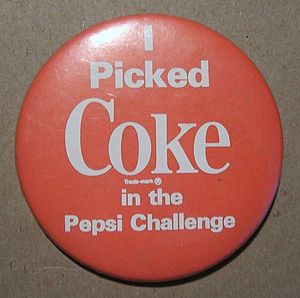
English: A Coke pin

English: A Coke pin (Photo credit: Wikipedia)

Recently, Stuart Shieber, Director of the Office for Scholarly Communication at Harvard published the edited text of a talk he gave at the annual meeting of the Linguistic Society of America, in which he praised open access (OA) as a better system for learned societies. This is an important topic, especially now because? Parliamentary hearings are going on in the UK exploring how RCUK mandates may affect learned societies.

Judging from the text, Shieber?s talk argued points his facts directly undercut, argued facts he didn?t understand, and asserted realities that don?t exist, yet he failed to realize any of this.

Shieber is a relentless advocate of OA publishing, and has been a force at Harvard driving their policies in this regard. In his recent post, Shieber argues that not-for-profit publishers are more efficient than commercial publishers because they command a lower price in the market for their goods, don?t engage nearly as much in bundling, and have smaller margins. This interpretation of the facts has four obvious problems:

  • Commercial publishers often publish on behalf of not-for-profit societies.
  • Commanding a higher price in the market is a sign of efficiency and effectiveness.
  • Having larger margins is a sign of efficiency.
  • Bundling is a sign of scale, which can only occur if there is efficiency.

In short, Shieber is looking through the wrong end of the binoculars. Of course, his main argument hinges on a related piece of equally spurious logic:

. . . the reason that scholarly societies benefit from playing in the open-access APC market rather than the closed-access subscription fee market is the difference in the goods being sold. When the good is a journal bundle, the companies with the biggest bundles, the large commercial publishers, win. When the good is publisher services for an individual article, the publishers that can deliver those services for an individual article most efficiently, the non-profit publishers, win. Sure, there are economies of scale, but empirical evidence shows that the scholarly societies are already far better able to efficiently deliver services despite any scale disadvantage.

As we?ll see, Shieber?s ?empirical evidence? is inadequate. He hasn?t parsed the market correctly. And the superior profitability and price advantages of publications going through a commercial publisher ? whether those publications are owned by a non-profit society or the commercial publisher ? make a mockery of this line of reasoning. In fact, OA will probably be done more efficiently by large commercial publishers ? viz, the acquisition of BioMed Central by Springer.

Basic business tenets also work against his argument. Every business has a core set of functions ? IT, legal, HR, finance, facilities, insurance, and so forth. If the organization is small, those functions take up a large proportion of revenues and staff. The organization is comparatively inefficient. Larger organizations can use systems, time zones, currency hedges, and many other techniques to increase efficiency, making the money they spend go farther. They also tend to have lower overheads ? less of their revenues devoted to supporting core functions.

The assertion that commercial publishers are less efficient than non-profit publishers is just wrong. Laughably wrong. Their margins are better, their market penetration is better, and their sales forces are better. That?s why so many non-profit societies sign contracts with commercial publishers. They want the benefits these organizations can and do deliver. And there is a reason these organizations can beat the status quo of running publications in-house ? they are more efficient and effective.

Of course, nothing can dissuade the true believer from the assertion that OA is superior. So, we get a litany of facts and reasoning. Let?s examine Shieber?s facts and reason a little more closely to see how much they have to be elided to fit the argument.

To start, Shieber uses the economic concept of a ?complement? incorrectly, asserting that two journals complement each other in the same way hot dogs and hot dog buns complement each other. That is, when hot dog sales fall, hot dog bun sales fall. That kind of relationship does not exist between journals. It exists between audiences and journals ? if there are no more druids, druidic journals disappear, for example. But Journal A?s usage doesn?t drive Journal?s B usage in any appreciable and direct way. His use of the term smacks of sophistry.

Cherry-picked facts come next. Shieber compares subscription prices between commercial and not-for-profit journals. The data he uses are a decade old, from 2002. Unfortunately, the comparison doesn?t represent reality in any year ? commercial publishers publish not-for-profit society journals. A potentially enlightening comparison would be to compare three different cohorts:

  1. Journals owned by for-profit publishers with no not-for-profit involved
  2. Society-owned journals published by commercial publishers
  3. Society-owned journals published independently

Despite using economic concepts incorrectly, having the wrong framework, and relying on outdated facts, Shieber argues on. His main observation is that price differentials are a clear sign of market failure. He?s right ? in a commodity-based market. His example is Coke vs. Pepsi. These are cola commodities. While it pains me to admit, I will settle for a Pepsi when Coke isn?t available. They are, to some degree, interchangeable. But in a market that has differentiated goods, prices diverge. Think about the difference in price between a Scion and a Lexus ? both made by the same company, both automobiles, but brand and features differentiate their prices significantly. Price divergence is not a sign of a malfunctioning market of differentiated, non-commodity goods. Think First Class vs. coach. Think Godiva vs. Nestl?. Think Nordstrom vs. Wal-Mart. Shieber?s economic analysis is simply wrong.

Sheiber?s thinking doesn?t even make internal sense. He notes that APCs vary greatly, ranging in his expert opinion from $0 to $3,000 (in reality, there are higher APCs on the market already). If OA is selling a commodity (peer-review, copy editing, and publication), how could prices diverge like this? And wasn?t he just claiming that price divergence is by definition a sign of a dysfunctional market? Therefore, is the OA market already broken?

He points to more out-of-date data to assert that most OA journals don?t charge APCs. It?s from a 2009 post of his examining 2007 data. The data set is no longer available via the link Shieber provides, but it?s probably irrelevant anyhow. Things have changed significantly. How much have things changed? Well, 2007 is when PLoS ONE launched. In 2008, BioMed Central was acquired by Springer. The NIH Public Access policy went into effect in 2008. And so forth. These data are from a different era.

Sheiber also brags about how Harvard was the first university to resist the ?Big Deal,? but then goes on to explain how disaggregating the Big Deal landed them back at the same place, but with less to show for it. That is, they ended up paying as much as they?d paid before, but for 30 journals rather than the 130 they?d had through bundling. This hurts two of his points. Apparently, bundling is an efficient way to sell and buy journals, proving that commercial publishers are more efficient in the market. Also, it?s apparent that the best journals in the bundle is what Harvard was paying for, but in the bundle they also received some strong second- and third-tier journals, many of which probably came from non-profit societies using Elsevier as their publisher. This is what bundles do ? they help send revenues across more titles, many of which come from small societies. Bundles help smaller societies. Therefore, bundling is a boon to non-profit societies using commercial publishers.

But, of course, Shieber?s goal is to convince us that OA is better for not-for-profit societies. To find a more current source of information, let?s look at an example that emerged from the Parliamentary hearings on the same day that Shieber?s post was published. In this example, we?re dealing with a UK non-profit society (the Tavistock Institute) that gleans $1,633,565 per year in revenues by publishing 60 articles per year in the journal Human Relations. Their publisher is SAGE, a commercial publisher. If the Tavistock Institute were to go to a complete OA model with attendant CC-BY licenses, the Institute would make $90,000 per year at Shieber?s proposed rate of $1,500 per article. In other words, their journal would lose $1,543,565 in revenues by shifting to OA. How does this help the Tavistock Institute?

This kind of trade-off isn?t uncommon, and it?s why societies are so concerned about unthinking mandates and policy shifts. You can see this example and many more in the public evidence available online for the UK?s Parliamentary proceedings.

Shieber throws accusations with abandon. Does the Big Deal violate anti-trust regulations? He points to a 2004 paper ? one single paper ? that suggested it may. What has happened in the last eight years? Based on my online searches, the answer is, ?Nothing.? There was one speculative paper, and then crickets. Shieber uses the empty rhetorical trick of playing organ music to evoke anxiety.

Finally, Shieber notes that 600 scholarly societies publish OA journals. However, when you begin clicking on links in the list he points to, a 404 error or being sent to a society home page is a very likely result. It seems many of these journals have gone by the boards ? journals that seem to be identified with the designation ?Transfer to publisher? or ?Transfer to society.? Others I looked at are publishing an article every week or two, hardly enough to sustain a robust journal?s infrastructure.

But back to the fundamental question: Is OA better for non-profit societies? Judging from what Shieber is inadvertently telling us, I?d be very concerned if I were running a not-for-profit learned society, especially in the UK. Not only are facts being twisted by OA advocates to suit a narrative, but once those facts are placed in a sensible tableau, the picture that emerges is one full of risk and penury.

Source: http://scholarlykitchen.sspnet.org/2013/01/31/backfire-an-argument-that-oa-is-better-for-non-profit-societies-demonstrates-just-the-opposite/

acura nsx all star weekend 2012 giada de laurentiis howard hughes nationwide race wanderlust gone

One FC?s Peter Davis is a fighter, model, actor and a ?Hot Guy Who Cooks?

Peter Davis is a model, actor, and has worked in finance. He also once worked in finance, and appeared on an Asian television show called, "Hot Guys Who Cook." In addition to those roles, Davis will take his 5-1 record to One FC 7 this weekend, where he will fight Leo Krishna in Kuala Lumpur.

Davis said that fighting, acting and modeling are not as different as you would think.

"I'm in entertainment. In modeling, acting, film, and sometimes I do fighting," Davis told Cagewriter. "It's a bit of a strange thing to do, considering modeling and acting but it's still all entertainment."

He has had runway shows and commercial shoots after fights. When he told agents about fights, they rarely understood what MMA entailed. He has been asked if he wore headgear to fights.

"The agencies are usually quite concerned when I say I'm going to fight. Headgear? Kind of?"

He describes his style of fighting as unorthodox, comparing it to Lyoto Machida.

"If they're looking at me, and they're looking at my fighting style, it's just not very orthodox. I end up with lots of options with my striking. My ground game is quite reasonable. I can roll with brown belts and purple belts, but I'm a stand-up fighter who has the power to knock people out."

Being elusive helps him from getting too beat up in the face, which helps with modeling.

"It's really the modeling style," Davis joked.

The son of a British man and Malaysian woman, Davis started fighting in 2004 in the UK, but retired in 2006. He continued to train, but didn't fight again until the MMA scene heated up in Malaysia, where he now lives. Now, he fights to test himself and see where the fight world will take him.

"I want to see that what I know does work, but to win a title belt would be nice. That would be amazing. It's such a huge event. After that, I don't know what I'd like to do. Whether it's acting, modeling or fighting. I don't want a long and arduous career of being punched in the face. I'd like to do more fights, maybe get a title belt and see where it takes me."

This weekend, it means a bout with Leo Krishna at One FC 7. Check out pay-per-view information here.

Source: http://sports.yahoo.com/blogs/mma-cagewriter/one-fc-peter-davis-fighter-model-actor-hot-212749506--mma.html

lyme disease symptoms esperanza spalding jessica sanchez robert kennedy cardinals san diego weather frances bean cobain

Wednesday, January 30, 2013

Facebook Offers Have Been Claimed By 42M Users

facebook adsFacebook COO Sheryl Sandberg highlighted the growth that Facebook Offers has seen since it launched last year ? she said that offers have been claimed by 42 million unique users. Sandberg's statement came during a larger discussion of Facebook's ad business during the company's fourth quarter earnings call. Last quarter, Sandberg said that 100,000 small- and medium-sized businesses have used the Offers product. Facebook's David Fischer also gave a talk last fall where he said that friend-to-friend sharing drives 3/4 percent of redemptions among the most popular offers.

Source: http://feedproxy.google.com/~r/Techcrunch/~3/vatCbnapK7M/

roy orbison the third man 2012 nfl draft order mohamed sanu chris polk chicago bulls st louis blues

Virginia Tech expands sports concussion-risk studies to include hockey and baseball

Virginia Tech expands sports concussion-risk studies to include hockey and baseball [ Back to EurekAlert! ] Public release date: 29-Jan-2013
[ | E-mail | Share Share ]

Contact: Steven Mackay
540-231-4787
Virginia Tech

The Virginia Tech Wake Forest University School of Biomedical Engineering and Sciences (http://www.sbes.vt.edu/) is expanding its ground-breaking research of testing football helmets to reduce the number of concussions to now include hockey, baseball, softball, and lacrosse.

The five-year plan will see the Virginia Tech research center, headed by Stefan Duma (http://www.sbes.vt.edu/duma.php), rate helmets worn by hockey, baseball, softball, and lacrosse athletes in their ability to lessen the likelihood of a concussion resulting from a violent head impact.

Ratings on hockey helmets are expected in fall 2013, followed by youth football in 2015, and then baseball, softball, and lacrosse in 2016. During that time, all ratings for adult and youth football helmets will continually be updated and released to the public.

The expansion into helmeted sports other than football comes on the heels of new research that allows for better prediction of sports-related concussions resulting from linear and rotational head accelerations. These accelerations result from head impacts that cause the head to translate and twist about the neck. The new research is published this month in the Annals of Biomedical Engineering (http://www.editorialmanager.com/abme/).

The new research is being funded by Virginia Tech, the National Highway Traffic Safety Administration, the National Institutes of Health, and the Institute for Critical Technology and Applied Science (http://www.ictas.vt.edu/) at Virginia Tech.

New ratings for football helmets will include data for linear and rotational accelerations starting in 2015, said Duma, professor of biomedical engineering and department head of the Virginia Tech Wake Forest University School of Biomedical Engineering and Sciences. Serving as lead author on the research paper is Steven Rowson (http://www.cib.vt.edu/people/bios/faculty_bios/bio_rowson.html), assistant professor of biomedical engineering at Virginia Tech.

All head impacts result in both linear and rotational accelerations, and this publication provides the foundation for our research to address both accelerations relative to reducing the risk of concussion, said Duma. Our goal with the five-year plan is to provide manufacturers with a schedule detailing when we will release helmet ratings for each sport.

The helmet rating system is based on more than a decade of data collection by Duma and his research staff, and utilizes the STAR, or Summation of Tests for the Analysis of Risk, formula that assesses the ability of football helmets to reduce concussion risk. Sport-specific testing methodologies will be added to the website that lists the rated helmets prior to the initial release of each sports helmets ratings.

Using data collected from more than 63,000 head impacts during a period of 10 years, Duma and Rowson related linear and rotational head acceleration to the probability of sustaining a concussion in the form of an injury risk function.

This new analysis utilizes data measured from 62 concussions sustained by high school, college, and professional football players, said Rowson. We use these data to determine the best method to predict concussions when we test helmets in our laboratory. In their research paper, the researchers write, With as many as 3.8 million sports-related concussions occurring annually in the United States and research suggesting possible long term neurodegenerative processes resulting from repetitive concussions, reducing the incidence of concussion in sports has become a public health priority.

Indeed, long-term, repetitive injuries that can cripple or eventually kill years after play have prompted dozens of headlines in major media outlets and several national studies, and even President Obama to recently weigh in on the subject. Dozens of former NFL players are suing the league over injuries sustained during years of play, and headlines were made this summer when former football great Alex Karras died at age 77 from various ailments, several allegedly said to be caused by years of hard hits.

In studying football-related injuries during the past decade, Duma and his research team have used on-field real-time sensors installed in the helmets of hundreds of adult and youth football players to study injuries, as well as a mechanical lab-tested 5-star rating system to track and grade commercially sold helmets.

The former can help indicate head injuries that require immediate attention while on the field of play. The latter has provided the only independent biomechanical data for consumers to make helmet purchasing decisions, Duma said.

Dumas goal is not to end the sport of football, but make it safer while still keep the same expected adrenaline rush and action for players, and viewers.

It is important to note that no helmet can prevent all concussions. The most effective strategies to reduce concussions in sports involve modifying league rules and player technique to limit exposure to head impacts, Duma said.

Beyond this, head impacts are a given in sport. Our research focuses on identifying helmets that reduce concussion risk so that athletes can make informed decisions based on independent data when purchasing equipment, which in turn, incentivizes helmet manufacturers to design helmets that better reduce head acceleration.

###


[ Back to EurekAlert! ] [ | E-mail | Share Share ]

?


AAAS and EurekAlert! are not responsible for the accuracy of news releases posted to EurekAlert! by contributing institutions or for the use of any information through the EurekAlert! system.


Virginia Tech expands sports concussion-risk studies to include hockey and baseball [ Back to EurekAlert! ] Public release date: 29-Jan-2013
[ | E-mail | Share Share ]

Contact: Steven Mackay
540-231-4787
Virginia Tech

The Virginia Tech Wake Forest University School of Biomedical Engineering and Sciences (http://www.sbes.vt.edu/) is expanding its ground-breaking research of testing football helmets to reduce the number of concussions to now include hockey, baseball, softball, and lacrosse.

The five-year plan will see the Virginia Tech research center, headed by Stefan Duma (http://www.sbes.vt.edu/duma.php), rate helmets worn by hockey, baseball, softball, and lacrosse athletes in their ability to lessen the likelihood of a concussion resulting from a violent head impact.

Ratings on hockey helmets are expected in fall 2013, followed by youth football in 2015, and then baseball, softball, and lacrosse in 2016. During that time, all ratings for adult and youth football helmets will continually be updated and released to the public.

The expansion into helmeted sports other than football comes on the heels of new research that allows for better prediction of sports-related concussions resulting from linear and rotational head accelerations. These accelerations result from head impacts that cause the head to translate and twist about the neck. The new research is published this month in the Annals of Biomedical Engineering (http://www.editorialmanager.com/abme/).

The new research is being funded by Virginia Tech, the National Highway Traffic Safety Administration, the National Institutes of Health, and the Institute for Critical Technology and Applied Science (http://www.ictas.vt.edu/) at Virginia Tech.

New ratings for football helmets will include data for linear and rotational accelerations starting in 2015, said Duma, professor of biomedical engineering and department head of the Virginia Tech Wake Forest University School of Biomedical Engineering and Sciences. Serving as lead author on the research paper is Steven Rowson (http://www.cib.vt.edu/people/bios/faculty_bios/bio_rowson.html), assistant professor of biomedical engineering at Virginia Tech.

All head impacts result in both linear and rotational accelerations, and this publication provides the foundation for our research to address both accelerations relative to reducing the risk of concussion, said Duma. Our goal with the five-year plan is to provide manufacturers with a schedule detailing when we will release helmet ratings for each sport.

The helmet rating system is based on more than a decade of data collection by Duma and his research staff, and utilizes the STAR, or Summation of Tests for the Analysis of Risk, formula that assesses the ability of football helmets to reduce concussion risk. Sport-specific testing methodologies will be added to the website that lists the rated helmets prior to the initial release of each sports helmets ratings.

Using data collected from more than 63,000 head impacts during a period of 10 years, Duma and Rowson related linear and rotational head acceleration to the probability of sustaining a concussion in the form of an injury risk function.

This new analysis utilizes data measured from 62 concussions sustained by high school, college, and professional football players, said Rowson. We use these data to determine the best method to predict concussions when we test helmets in our laboratory. In their research paper, the researchers write, With as many as 3.8 million sports-related concussions occurring annually in the United States and research suggesting possible long term neurodegenerative processes resulting from repetitive concussions, reducing the incidence of concussion in sports has become a public health priority.

Indeed, long-term, repetitive injuries that can cripple or eventually kill years after play have prompted dozens of headlines in major media outlets and several national studies, and even President Obama to recently weigh in on the subject. Dozens of former NFL players are suing the league over injuries sustained during years of play, and headlines were made this summer when former football great Alex Karras died at age 77 from various ailments, several allegedly said to be caused by years of hard hits.

In studying football-related injuries during the past decade, Duma and his research team have used on-field real-time sensors installed in the helmets of hundreds of adult and youth football players to study injuries, as well as a mechanical lab-tested 5-star rating system to track and grade commercially sold helmets.

The former can help indicate head injuries that require immediate attention while on the field of play. The latter has provided the only independent biomechanical data for consumers to make helmet purchasing decisions, Duma said.

Dumas goal is not to end the sport of football, but make it safer while still keep the same expected adrenaline rush and action for players, and viewers.

It is important to note that no helmet can prevent all concussions. The most effective strategies to reduce concussions in sports involve modifying league rules and player technique to limit exposure to head impacts, Duma said.

Beyond this, head impacts are a given in sport. Our research focuses on identifying helmets that reduce concussion risk so that athletes can make informed decisions based on independent data when purchasing equipment, which in turn, incentivizes helmet manufacturers to design helmets that better reduce head acceleration.

###


[ Back to EurekAlert! ] [ | E-mail | Share Share ]

?


AAAS and EurekAlert! are not responsible for the accuracy of news releases posted to EurekAlert! by contributing institutions or for the use of any information through the EurekAlert! system.


Source: http://www.eurekalert.org/pub_releases/2013-01/vt-vte012813.php

denver weather super bowl recipes planned parenthood what time does the superbowl start kobayashi margaret sanger paul george

Man detained by Taye Diggs charged with burglary

FILE - In this Tuesday, Jan. 22, 2013 file photo, American actor Taye Diggs poses for a portrait, in New York. Los Angeles prosecutors charged a 20-year-old man with felony residential burglary on Tuesday Jan. 29, 2013, two days after Diggs detained Hassan Omar Juma after returning from the Screen Actors Guild Awards and finding the man in his garage. (Photo by Amy Sussman/Invision/AP, file)

FILE - In this Tuesday, Jan. 22, 2013 file photo, American actor Taye Diggs poses for a portrait, in New York. Los Angeles prosecutors charged a 20-year-old man with felony residential burglary on Tuesday Jan. 29, 2013, two days after Diggs detained Hassan Omar Juma after returning from the Screen Actors Guild Awards and finding the man in his garage. (Photo by Amy Sussman/Invision/AP, file)

FILE - In this Tuesday, Jan. 22, 2013 file photo, American actor Taye Diggs poses for a portrait, in New York. Los Angeles prosecutors charged a 20-year-old man with felony residential burglary on Tuesday Jan. 29, 2013, two days after Diggs detained Hassan Omar Juma after returning from the Screen Actors Guild Awards and finding the man in his garage. (Photo by Amy Sussman/Invision/AP, File)

LOS ANGELES (AP) ? Prosecutors say a man who was detained by Taye Diggs after the actor found him at his home has been charged with felony burglary.

Hassan Omar Juma faces up to six years in prison if he is convicted and is scheduled to be arraigned in a Los Angeles courtroom Wednesday afternoon.

Diggs detained the 20-year-old after he and his wife found him in their garage on Sunday night. The "Private Practice" star was returning from the Screen Actors Guild Awards, where he was a presenter.

Juma was charged Wednesday with first-degree felony residential burglary. He's jailed in lieu of $50,000 bail.

Police say Diggs caught Juma after chasing him and neither man was hurt in the incident.

Associated Press

Source: http://hosted2.ap.org/APDEFAULT/4e67281c3f754d0696fbfdee0f3f1469/Article_2013-01-29-People-Taye%20Diggs/id-b0527f760a844073a550c24790186fe5

april 9 albatross louis oosthuizen phil mickelson 10 year old gives birth c. difficile carmelo anthony

The Worst Home Selling Mistakes To Prevent - Business ? Solo ...

Unfortunately, unless you have some experience with placing homes on the market; you are the perfect candidate for failure. Given the wide range of sources for information regarding this subject; you have no reason to be unsuccessful. The information is readily available on the web and finding it is easy. When you decide to sell your house, you need to be prepared to take the task on and see it through. When you are aware of these valuable points, you will be able to keep from spending thousands. Below you will find some great tips on reaching the goals you have set for the sale of your home.

It?s fine to search the internet for real estate agents, and you?ll have no problems finding one. It is important to choose one near where you live if possible. You will usually find that local agents will be more helpful since they know the landscape in your area. It is vital, especially in regard to selling your home, that you realize this. Settling on the asking price involves knowledge of your market, or should at least. Not choosing the right price is something that could lead to your house becoming unlisted. Always remember this ? if your home drops from the listings, it will be harder to sell. Don?t let it drop!

We are providing you solid pieces of info here, but do be aware that some are more important to understanding home selling. However, the bottom line is how you want to make use of it, and how much of it will effect your situation. Yet you do understand there is much more to be discovered about this. Keep reading to discover even more, and what we will do is add a few more critical topics and recommendations for you to consider. Some of these tips really are critical to your comprehending, and there is even more going further than what is about to be covered.

You may be surprised to discover that data shows that the first offer a seller gets will be the highest one they receive. Although you may believe this to be statistically incorrect, lower prices always come later. In regard to statistics, there are always exceptions to the rule. Once you understand this, you won?t be surprised later on. Anytime a house is actually a new listing, buyers will offer a higher bid to make sure that they can get it. Typically, the seller will turn down the initial bid, even if it is a good one, thinking higher bids will still come in. However, that is usually not the case and then things begin a downward spiral.

Many people will be operating on a limited budget at the time they want to sell their homes. When you find yourself in this state you would be wise to see what the internet has to offer. This is a good site for ingenious ways to show your home at its best. You will be astounded to see what the internet has to offer. It is important to give your home charisma and attract as much attention from the public as you can. When you not only intend on presenting your home in a warm light, but follow through with it; you ought to do nicely in the long run. You may not realize the impact your commitment will have on the overall sale of your home.

Costly home selling mistakes happened to many people. You need to avoid these and remember that your house is your investment. You need to take this seriously! Fortunately, that is not as difficult as it may sound to you. As long as you have the information available, you can control what is happening and get things done the right way.

The writer is an internet advertising expert who writes on various real estate matters corresponding to ? short sales in orlando, short sales in tampa and tampa short sale expert

Source: http://robertrudeu.bugs3.com/the-worst-home-selling-mistakes-to-prevent-3-proven-methods-to-help-you/

archer ibooks 2 ifl indoor football league newt gingrich wife callista rick perry

Tuesday, January 29, 2013

Jon's Blog: Horse Shooting in Johnson County, Iowa // Plus My ...

Not too long ago, I learned from the KCJJ Facebook page some troubling news about a horse, specifically:
Scanner traffic indicates Johnson County sheriff's deputies are investigating the reported shooting of a horse; 1 other injured
Which got me thinking that this would be a really good article to write about if I knew more, which then got me thinking that I haven't posted a list of favorite comic book characters in a while. So until I get more information about our local horse shooting, I though it might be fun to list my Favorite Five Comic Book Horses!: 5. Horse: Horse is one of those characters that I know almost nothing about, but that I would absolutely love to see in comic books so that I could learn about him. Horse was a Chinese agent who once belonged China's now-former national super-hero team, China Force. After he left China Force, Horse and two other super-agents attempted to conquer Hong Kong, but ended up getting killed by an American agent named Rick Mason. Horse's powers were pretty basic. He could kick -- really hard. I would love for someone to resurrect this Chinese mutant and I'm not even for sure why. I like the simplicity of his powers, but I also kind of just like the way he looks. And sometimes that's enough to get onto my various lists of favorite comic book characters! 4. Brightwind: Long ago while lost in Asgard, Danielle Moonstar of the New Mutants rescued a winged horse from hunters. Because of her actions, Danielle ended up becoming a Valkyrie. Brightwind moved to the X-Mansion with the X-Men and New Mutants and then died and then got better, but she's always remained bonded to Danielle. In recent years, Danielle once again became a part-time Valkyrie. Unfortunately, we haven't seen enough of Brightwind for my preference. Danielle is slated to joined an all-female team of Defenders soon and that team is being modeled after the Valkyries, so I'm really keeping my fingers crossed that we'll get to see more of Brightwind soon! 3. Thunder: Several years ago, Marvel Comics relaunched a poorly conceived version of Alpha Flight, Canada's premier super-team. Sasquatch was gathering a new team of Alphans and recruited a local hero named Major Mapleleaf, who appears to have the powers of flight and super-strength and invincibility. Except that he didn't. His horse did. That's right. Major Mapleleaf's horse, Thunder, was a magical steed who kept his master safe from harm -- until the costumed mountie got himself killed by an out-of-control mutant named the Collective. Presumably Thunder is still galloping around Toronto -- which offers the possibility of future Pet Avengers membership. Not that I'm begging... 2. Comet: I have actually never read a comic book with this classic comic book character in it, but the pure creepiness of Supergirl's pet horse, Comet the Super-Horse, is enough to get him onto this list. Apparently, Comet the Super-Horse was once an ancient centaur who got transformed into a horse by a nasty witch. Supergirl eventually adopted him as her pet horse and he eventually fell in love with her. He eventually begins visiting her dreams every night and then learned how to become human when in our solar system so that he can romance Supergirl. When not making out with Supergirl, Comet could often be seen fighting crime with Krypto and the other Superman-themed animals in the Legion of Super-Pets. 1. Comet: You read the correctly. My first and second favorite comic book horses are both named Comet. This second Comet was introduced in a relaunched SUPERGIRL comic book back in the late 90s. Supergirl kept running into this really fast horse-like alien hero named Comet and found herself falling head-over-heels for the big lunk. There was an ongoing storyline where she struggled to figure out which of the guys in her life was Comet's alter ego. Then she found out that Comet wasn't a "he". He was a "she" named Andrea Martinez. Sort of. You see, Comet was an injured jockey who became a superhuman through an injection of equine DNA and Andrea Martinez was a suicidal lesbian who had just been rejected by her parents. Comet tried to save the suicidal Andrea and they both ended up getting killed by an avalanche. Fortunately, this sacrifice merged and resurrected the two into an Earth Angel of Love. (Yes, it's complicated, but they were still pretty cool.) Comet and Supergirl eventually broke up, which led to Comet hooking up with another Earth Angel named Blithe (a bisexual woman who loved both Comet and Andrea).

Comet was one of the first blatantly gay characters in comic books back in the late 90s. Before that, LGBT characters weren't unheard of, but they were often more hinted at than anything else. Andy was an out lesbian who was clearly attracted to both Supergirl and Blithe and that was pretty cool at the time. Unfortunately, both Comet and Blithe disappeared into comic book limbo when this particular SUPERGIRL series got canceled. Still, there's hope that one or both of them will revisit Supergirl at some point in the future. Maybe...

So those are my favorite comic book horses. Who are your favorites?

Source: http://jontrouten.blogspot.com/2013/01/horse-shooting-in-johnson-county-iowa.html

jadeveon clowney orange bowl Rose Parade 2013 rex ryan PNC Bank Louisville football Fidelity

Monday, January 28, 2013

Canon EF 100mm f/2.8 Macro USM

By Jim Fisher

The Canon EF 100mm f/2.8 Macro USM ($599.99 direct) is a telephoto lens for Canon cameras that can focus close enough to capture objects with true 1:1 magnfiication. It is adequately sharp, even at its maximum aperture, but does suffer from some optical issues in certain high-contrast situations. There are other macro lenses of similar focal lengths available for Canon cameras, including the company's own EF 100mm f/2.8L IS USM?part of its top-end L series of lenses?as well as the manual focus Carl Zeiss Makro-Planar T* 2/100?but both will put a bigger dent in your wallet than this relatively inexpensive lens.

The lens is rather compact when you consider its focal length, aperture, and close focus capability. It measures 4.7 by 3.1 inches (HD) and weighs about 1.3 pounds. Standard 58mm filters are supported, and the front element doesn't rotate so using a polarizing filter is possible if desired. There is a focus limiter switch on the lens, so you can set it to seek focus over its entire range, or to restrict it to close focus only. A lens hood, which will reduce the chance of flares and improve image contrast, is not included.

I used Imatest to check the sharpness of the lens when paired with the full-frame Canon EOS 6D. It just crossed the 1,800 lines per picture height barrier at f/2.8, which is what we require to define an image as sharp using a center-weighted algorithm. Stopping down to f/4 improves the score to 2,152 lines, and the lens performs at its best at f/8, where it nears 2,500 lines. Distortion is not an issue, but the lens is prone to color fringing when shooting high-contrast scenes?this can be corrected in Lightroom, but requires a little bit of work with sliders to remove the unwanted purple and green aberrations. The Zeiss Makro-Planar opens up to f/2?capturing twice the light as this lens?and is sharper at both f/2 and f/2.8. It isn't prone to color fringing, but only offers 1:2 magnification and doesn't support autofocus.

The Canon EF 100mm f/2.8 Macro USM is the lesser-loved of Canon's pair of 100mm macro lenses. Its more expensive sibling, the EF 100mm f/2.8L Macro IS USM, adds image stabilization and uses a more complicated optical design?but it costs $1,049. There's also the manual focus Zeiss Marko-Planar?it has a faster aperture and is impressively sharp, but costs $1,843 and only supports 1:2 magnification. The EF 100mm f/2.8 isn't the best macro lens that you can buy, but it's adequately sharp and delivers true 1:1 magnification.

More Digital Camera Reviews:
??? Canon EF 20mm f/2.8 USM
??? Canon EF 100mm f/2.8 Macro USM
??? Canon TS-E 90mm f/2.8
??? Canon EF 180mm Macro f/3.5L USM
??? Canon EF 28mm f/1.8 USM
?? more

Source: http://feedproxy.google.com/~r/ziffdavis/pcmag/~3/-yDTzdmDQBg/0,2817,2414705,00.asp

miracle andy whitfield kennedy demi moore roy oswalt kevin martin 2012 senior bowl

Sunday, January 27, 2013

Screeners of unusual size? I don?t think they exist. (Unqualified Offerings)

Share With Friends: Share on FacebookTweet ThisPost to Google-BuzzSend on GmailPost to Linked-InSubscribe to This Feed | Rss To Twitter | Politics - Top Stories News, News Feeds and News via Feedzilla.

Source: http://news.feedzilla.com/en_us/stories/politics/top-stories/279777577?client_source=feed&format=rss

cinnamon challenge lou dobbs rock salt david letterman march of dimes james randi wargames

McCain: Immigration plan to have pathway to citizenship

Two senators at the center of negotiations over comprehensive immigration reform, Sen. John McCain (R-Ariz.) and Sen. Bob Menendez (D-N.J.) said on Sunday that a pathway to citizenship is an essential component of a comprehensive reform bill.

"That has to be also part of it," McCain told ABC News' Martha Raddatz on "This Week" when asked whether a pathway to citizenship would be a component of reform. "There's a new appreciation on both sides of the aisle including, maybe more importantly on the Republican side of the aisle, that we have to enact comprehensive immigration reform."

Like "This Week" on Facebook here. You can also follow the show on Twitter here.

McCain said that a small group of Senators will release the principles of a comprehensive, not "piecemeal," reform bill this week.

"I'm very pleased with the progress," McCain said. "It's not that much different from what we tried to do in 2007."

Read a full transcript of the interview with Sens. McCain and Menendez HERE.

Menendez, who met with President Obama on Friday along with other members of the Congressional Hispanic Caucus leadership, said that the president expressed his full commitment to reform.

"The president made it very clear in that discussion that this was a top legislative priority for him in this session of the Congress and that he expects to work with all of us in an effort to achieve that goal and he's fully committed to it."

He added that a pathway to "earned legalization" is an "essential element" of an immigration reform bill.

"First, Americans support it in poll after poll. Secondly, Latino voters expect it. Thirdly Democrats want it. And fourth Republicans need it," Menendez said.

McCain added that he believes Obama's use of the presidential podium on behalf of immigration reform at an event in Las Vegas planned for Tuesday will aid efforts to pass a bill.

"I think it helps," McCain said. "I think its important that we all work together on this."

"Believe it or not, I see a glimmer of bipartisanship out there," he added.

Also Read

Source: http://news.yahoo.com/senate-immigration-proposal-pathway-citizenship-152655874--abc-news-politics.html

Wimbledon 2012 TV Schedule fourth of july Jason Terry IFE Fireworks 2012 4th Of July independence day BET Awards 2012

Feather her Nest ~ Santa Barbara Baby Shower - Melissa Musgrove

[unable to retrieve full-text content]... shower theme. Santa Barbara Baby shower design using bird's nest, daffodils, bird cages. ... My niece Kelly is having her first baby, and I was delighted, with the help of my sister Sydney, to throw her a baby shower in my home. She and her husband chose not to find out the sex of the baby, so we didn't do a pink or blue theme. Since her family and friends are helping to ?feather her nest? I thought it would be cute have a bird themed baby shower. A special thank you ...

Source: http://www.melissamusgrove.com/feather-her-nest-santa-barbara-baby-shower/

earthquake california earthquake california roy orbison the third man 2012 nfl draft order mohamed sanu chris polk

Sourcing Manager - HigherEdJobs

Position Summary: Reporting to the Associate Director for Strategic Sourcing, the Sourcing Manager is responsible for effectively managing the supply and demand for a specific set of commodities, primarily Laboratory Equipment/Supplies/Chemicals and Computer Hardware/Software/Peripherals. This position is expected to be well informed of market trends and strategies for these commodities, and use data and analysis to make informed decisions to achieve ideal outcomes.

The Sourcing Manager partners with key stakeholders to understand the business strategy, identify the sourcing requirements for goods and services, perform industry and supplier analyses, execute competitive bidding processes, recommend options that optimize mix of cost and quality, select suppliers, and negotiate supplier pricing and terms.

This position will manage/facilitate contracting and negotiation, as well as supplier on-boarding. This includes negotiating payment terms and methods in support of Accounts Payable objectives. The Sourcing Manager will benchmark, measure, and manage supplier performance to ensure accurate pricing and effective levels of service.

This position serves as a liaison between the Office of Finance & Treasury, suppliers, and campus departments. The Sourcing Manager meets frequently with campus constituents to review business plans, identify savings and service opportunities, monitor contract compliance and facilitate the exchange of commodity and contract information.

Primary duties include the following:

  • Develop effective sourcing strategies and action plans for new or improved supplier agreements as well as internal demand management and purchasing behavior changes. Collaborate with Sourcing Managers, campus customers, and other key stakeholders to produce best-in-class supplier contracts that will result in cost savings and operational efficiencies.
  • Develop strategic sourcing business cases through detailed analysis of contracts, spend data, usage patterns, future demands, and benchmark data. The business cases must tell a compelling story related to the savings opportunity and potential change management considerations.
  • Develop strategies and lead supplier negotiations. Analyze supplier proposals and recommend appropriate next steps in the negotiation process. Facilitate all formal activities related to competitive bidding events. Proactively promote the adoption and utilization of online competitive bidding technology where appropriate.
  • Develop requests for proposals and manage the competitive bidding process.
  • Collaborate with campus stakeholders to implement sourcing solutions including establishing the contract, on-boarding new suppliers, overseeing establishment of catalogues, and coordinating training and communication as part of the deployment.
  • Manage the end-to-end supplier relationship, including quarterly reviews of supplier performance, contract compliance, and pricing.
  • Meet quarterly with campus constituents to identify savings and service opportunities, monitor contract compliance and facilitate the exchange of commodity and contract information.
  • Support the University's sustainability objectives and represents the Purchasing team on various institutional sustainability initiatives.
  • Review, evaluate, and approve purchase orders within the departmental limits, including ensuring process and policy compliance.
  • Route orders that exceed approval limit of $50,000 to the Associate Director for Strategic Sourcing for review and approval.
  • Negotiate supplier pricing and terms, thoroughly calculate cost savings, and document purchase transactions in compliance with University policy and industry best practice.
Essential Qualifications: Position Requires:
  • Bachelor's degree in a relevant field or equivalent work experience
  • 5 to 7 years of experience in purchasing including strategic sourcing
  • Advanced negotiation skills
  • Strong understanding of legal terms and conditions
  • Sourcing and contracting experience within the Laboratory Equipment/Supplies/Chemicals and Computer Hardware/Software/Peripherals commodities
  • Advanced proficiency with Microsoft Office Tools (Excel, Word, PowerPoint, Access)
  • Adept at working with large and complex datasets to gain insight
  • Proficient with analytical, reporting, and dash boarding tools
  • Experience with procure-to-pay technologies
  • Experience managing compliance with internal and external policies/ requirements (e.g. Sponsored Research, Environmental\Health and Safety, Tax Reporting)
  • Experience measuring supplier performance
  • Experience with using automated purchasing applications
  • Excellent project management skills
  • Strong communication skills
  • Proven ability to develop and maintain influential and collaborative relationships
Education Required: Bachelor's Degree

Preferred Qualifications: Preferred:

  • CPM or CPSM certification
  • Experience working in a higher education environment
  • Experience with on-line bidding
  • Experience with the PeopleSoft purchasing application
The final candidate is required to successfully pass a background check.

Princeton University is an equal
opportunity/affirmative action employer.

Source: http://www.higheredjobs.com/details.cfm?JobCode=175713187

spinal muscular atrophy brooklyn nets may day protests tony nominations 2012 facebook organ donor jessica simpson gives birth carrie underwood blown away

Saturday, January 26, 2013

Imagining a skeuomorphic-free, all-aluminium iOS 7

Imaging a skeuomorphic-free, all-aluminium iOS 7

Skeuomorphism -- the use of real world design in a digital context -- has been a target lately. At the extreme, it's held up as an example of iOS being boring, outdated, and bereft of innovation. In more reasonably terms, it's looked at as something that can be useful, but has perhaps been overused. I've gone on record as saying I think there are far more important things Apple needs to do in iOS 7 than wiping the world clean of skeuomorphism, both here on the site and in a podcast rant. But let's imagine for a moment it is on the agenda. That Apple's new head of all design, hardware and software, Jony Ive, was set to impose a new, unified, Aluminium theme. That, just like the Scarlet Witch in House of M, he whispered "No more Skeuomorphs."

Instead of arguing in the abstract about how much better or worse it would be, let's mock it up and see what could that look like...

A unified, aluminium iOS

Back before iOS 6 there were rumors of a complete, consistent re-skinning of the core interface into something more subdued and "silver". That didn't come to pass, though Apple's newest built-in app, Maps, did get a more subdued, more silver make-over, complete with new, floating buttons. Inspired by a discussion with Grant Paul for an upcoming episode of the Debug podcast,

I'm going to use something akin to that as a foundation, with a hint of the WWDC 2012 for the more heavily designed apps. I'm calling it "aluminium" in honor of how Jony Ive (properly) pronounces the word. Here's an example of Find my Friends, iBooks, and Game Center, stripped down and anodized.

Under the theory that consistency is usability, the more lightly-designed built-in apps could also adopt the same look and feel. Here's an example of Settings, Mail, and Safari.

Additional background

A lot has been written about skeuomorphism lately, by a lot of people far more experienced than me. Dave Wiskus, in an article for Macworld, explored the future of Apple design, saying:

Steve Jobs very purposefully built Apple to be a skate-to-where-the-puck-is-going company, and while skeuomorphic design has acted as a bridge between the physical world and digital abstractions, it?s becoming increasingly obvious that the world is comfortable with digital now. Technology is no longer witchcraft to be feared by the masses. We?ve grown accustomed to having phones, tablets, and computers around us to do things. With both visual and interaction design, we?re nearly past the point of real-world metaphors being useful, and the simplest representation is usually best.

John Gruber of Daring Fireball attributes much of this to the evolution from standard to HiDPI displays like Retina:

The trend away from skeuomorphic special effects in UI design is the beginning of the retina-resolution design era. Our designs no longer need to accommodate for crude pixels. Glossy/glassy surfaces, heavy-handed transparency, glaring drop shadows, embossed text, textured material surfaces ? these hallmarks of modern UI graphic design style are (almost) never used in good print graphic design. They?re unnecessary in print, and, the higher the quality of the output and more heavy-handed the effect, the sillier such techniques look.

Marc Edwards of Bjango also cites the print world, but mentions the technical limitations of rival platforms as a contributing factor to their simpler design languages:

In interface design, square finished corners are faster, because there?s no masking. Not including shadows is faster, because there?s less compositing. Drawing a flat colour is faster than drawing a gradient. When you have three or six pixel densities, drawing sharp textures is almost impossible, unless you include bitmap assets for every size you?re targeting.

Sebastiaan de With brought up a counterpoint on Twitter:

Very 'flat' UI is a meaningless reactionary design fad vs. overdesigned UI. Good designers aren't limited by style but taste and discretion.

I'm still of the opinion that it's less about skeuomorphism or it's opposite, digital authenticity, than it is about usability. In some cases, skeuomorphism helps make things discoverable, approachable, and engaging. In others, it just gets in the way.

Check out the examples above and let me know what you think. Would a unified skin across all of Apple's apps be more elegant or just more monotonous? Would a face lift make iOS less "boring" or just less interesting?

Update: Super-designer Louie Mantia brings up a couple of excellent points, and throws in a gorgeous mockup, on Twitter:

it's not about "flat" vs. "skeuomorphic," but more about "chrome" or "no chrome". I think that this might be a more interesting discussion to have than making all UI aluminum.

Louie Mantia no chrome Safari


Source: http://feedproxy.google.com/~r/TheIphoneBlog/~3/IC7WK_g9G40/story01.htm

weight watchers fandango kobe bryant google play Christmas Story after christmas sales case mccoy

Happy 55th Birthday, Ellen DeGeneres!

Source: http://www.thehollywoodgossip.com/2013/01/happy-55th-birthday-ellen-degeneres/

game changer selection sunday corned beef recipe time change rpi dst friends with kids

Thursday, January 24, 2013

Student gets dying wish from Reddit: Cryonic preservation

21 hrs.

?

Kim Suozzi, a 23-year-old neuroscience student with terminal brain cancer, received her dying wish of cryonic preservation on Jan. 17 after a successful fundraising campaign launched on the internet.

Cryonic preservation freezes legally-dead people to liquid nitrogen temperature to stop physical decay. People undergo it in the hope that future technology will exist to revive their bodies and restore them to good health.?

Suozzi announced her desire for cryonic preservation on Reddit, a social media website, in August 2012 after learning she had less than a year to live.?

?I?ve been interested in cryonics since long before I was even diagnosed, but I never thought that I would have to secure the finances so fast, and without a career or savings to stand on,? she wrote.

The procedure runs anywhere between $28,000 and $200,000 depending on the options chosen, according to io9.?

Suozzi?s request was picked up by the Society for Venturism, a non-profit futurist group that advocates cryogenics.?

The combined fundraising efforts succeeded and Suozzi went into cryosuspension at the Alcor Life Extension Foundation in Scottsdale, Ariz., on Jan. 17, the society announced.

The likelihood of a?person coming back to life using current freezing techniques is nil, Arthur Caplan, director of the Center for Bioethics at the University of Pennsylvania, told NBC News, especially given the vulnerability of cells to frosting and defrosting.

?It wouldn?t take a lot of damage to shift somebody from being a reconstituted person to being a reconstituted vegetable,? he said. ?You don?t need that much cell damage to cause harm.?

Even if a person were successfully restored, ?you?re going to be kind of a freak,? Caplan added.?

For one, in century or two, a person is unlikely to harbor immunity to flu or other diseases of the time and could easily get sick and?die upon first contact. Caplan likened the effect to the devastating spread of disease among Native Americans upon first contact with Europeans.

?Socially you are facing trouble because you are going to be this weird object of curiosity,? Caplan added. ?Friends are gone. No one is there. I would worry you quickly become isolated and depressed.?

Despite the unlikelihood of success and weird reality a person would wake to if cryonic preservation did indeed work, Caplan said people will still likely spend hundreds of thousands of dollars giving it shot.

?I think it is a ripoff,? he said. ?The dream of immortality is powerful, but I think it?s just a pipe dream.?

Suozzi was aware of the controversy and doubts surrounding cryonic preservation, but pursued it nevertheless. ?It?s a better shot at living again than if I were decomposing somewhere or cooked into ash,? she wrote.?

John Roach is a contributing writer for NBC News Digital. To learn more about him, check out his website. For more of our Future of Technology series, watch the featured video below.

Source: http://www.nbcnews.com/technology/futureoftech/student-gets-dying-wish-reddit-cryonic-preservation-1B8038221

nfl playoff picture Peter Billingsley Larry King Suzy Favor Hamilton mayan calendar end of the world end of the world

Android, iOS Top Developer Mindshare As Lead Platforms, But RIM?s Not So Far Behind, Finds Global Developer Survey

Screen Shot 2013-01-23 at 13.01.13When it comes to developing for mobile platforms, Android and iOS -- the top two mobile platforms by device sales worldwide -- are also first in the mind of app makers. But surprisingly, beleaguered BlackBerry isn't so far behind: an indication that, if RIM really connects on BB10, it could have a shot at some kind of comeback, or at least the support of developers to make sure it has the content ecosystem to attract consumers.

Source: http://feedproxy.google.com/~r/Techcrunch/~3/chnfnCzJImI/

James Eagan Holmes jeremy lin Sage Stallone Mermaid Body Found Celeste Holm Stephen Covey klimt

Drowning past regrets in tea and cigarettes, but I can?t seem to recall when you came along (Unqualified Offerings)

Share With Friends: Share on FacebookTweet ThisPost to Google-BuzzSend on GmailPost to Linked-InSubscribe to This Feed | Rss To Twitter | Politics - Top Stories News, RSS Feeds and Widgets via Feedzilla.

Source: http://news.feedzilla.com/en_us/stories/politics/top-stories/278881224?client_source=feed&format=rss

clintonville battlestar galactica blood and chrome my morning jacket roger goodell psychosis dianna agron million hoodie march